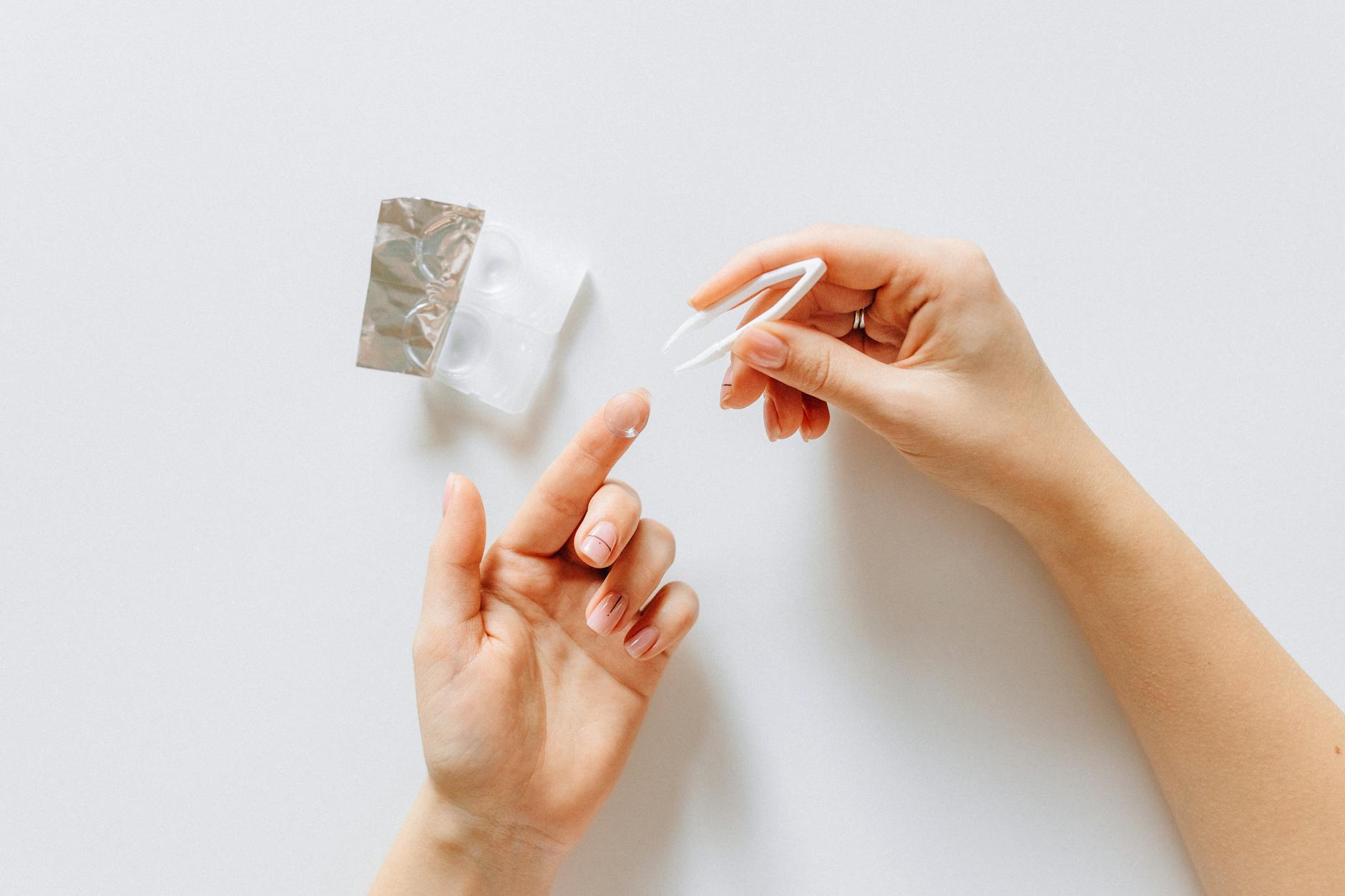
Yes, you need a valid prescription to buy colored contacts in the US, even if they carry zero vision correction. The FDA classifies all contact lenses as medical devices under the Contact Lens Rule. Selling or buying them without a prescription is illegal. This applies to cosmetic, decorative, and plano (non-corrective) lenses alike.
Why the FDA Requires a Prescription for All Contact Lenses
The FDA classifies every contact lens, including plano lenses with 0.00 diopter power, as a Class II or Class III medical device. To put that in perspective, Class II and III devices include things like insulin pumps and surgical implants. The classification is not about corrective power. It is about physical contact with human tissue. Any object that sits on your cornea and restricts oxygen flow carries real medical risk, and the FDA treats it accordingly. The Fairness to Contact Lens Consumers Act (FCLCA) of 2003, enforced through the FTC Contact Lens Rule, made it a legal requirement for every US seller to verify a valid prescription before completing any contact lens sale. That includes online stores, brick-and-mortar shops, pop-up vendors, and flea market booths. A licensed optometrist or ophthalmologist must measure your corneal curvature, assess your eye health, and issue a written contact lens prescription before any retailer can ship or hand you a pair. Currently, 45 million people in the US wear contact lenses (cdc.gov), and the prescription requirement exists to protect every one of them.
What Plano Lenses Are and Why They Still Need a Prescription
Plano lenses have a power of 0.00 diopters, meaning they do nothing for your vision. You might want them purely for an eye color change or a content shoot. That purpose does not change their legal or medical status. Plano lenses still sit directly on your cornea, still reduce oxygen transmission, and still need to match your specific base curve and diameter to fit safely. A lens that is even slightly too tight can create a suction effect, starving the cornea of oxygen and triggering hypoxia. Too loose, and the lens shifts with every blink, causing abrasion. The FDA's position is unambiguous: the cosmetic or corrective intent of a lens does not change its classification as a medical device. The contact lens exam exists to get those physical measurements right, not to check whether you need glasses.
How the Prescription Requirement Is Enforced at the Point of Sale
Under the FTC Contact Lens Rule, US-based retailers, both online and in-store, must verify your prescription directly with your eye care provider before fulfilling an order. The FTC has issued warnings and pursued enforcement actions against online sellers, pop-up retailers, and flea market vendors for illegal sales of decorative lenses. Overseas sites and gray-market sellers frequently bypass this requirement entirely, which is precisely why the FDA warns consumers against purchasing cosmetic contact lenses from non-US vendors. Buying from a non-compliant source also gives you zero legal recourse if the lenses arrive defective, contaminated, or simply wrong for your eye shape.
How to Get a Prescription for Colored Contacts (Even If Your Vision Is Perfect)
Getting a contact lens prescription when your vision is 20/20 is straightforward, but there is one step people often miss: you need a contact lens exam specifically, not just a routine eye exam. A standard vision check tests your sight. A contact lens exam adds corneal measurements, base curve assessment, and a fitting evaluation. These measurements determine which lens brand and size will actually sit safely on your eye. Tell your optometrist upfront that you want cosmetic colored contacts. For example, imagine you are a content creator planning a photoshoot for next Tuesday and want to shift your eye color to match a trending aesthetic. When you call your local optometrist on Monday morning, you can request a same-day contact lens exam specifically for cosmetic plano lenses. By afternoon, you will have your valid prescription in hand, allowing you to order from a compliant retailer and have lenses ready for your shoot without compromise. Many providers at vision centers like LensCrafters, America's Best, or independent optometry offices offer same-day contact lens exams. Telehealth options exist but may not satisfy the full fitting requirement in all states, so check your state's rules before booking one. Your written contact lens prescription must include base curve (BC), diameter (DIA), power listed as 0.00 for plano lenses, an expiration date, and the prescriber's name and contact information. Prescriptions are typically valid for one to two years depending on your state, after which a new exam is required. At Hapa Kristin Same-day Colored Contacts, we see customers all the time who walked into a same-day exam at their local optometrist and had a valid prescription in hand by the afternoon, ready to pick up their lenses that same day.
What Your Contact Lens Prescription Must Include
A valid contact lens prescription is a specific document, distinct from a glasses prescription. It must list base curve (BC), which is the curvature of the back surface of the lens, typically between 8.3 and 9.0 mm. It must also include diameter (DIA), the width of the lens, typically 13.8 to 14.5 mm for cosmetic lenses. For plano lenses, power is listed as 0.00. The prescription must carry an expiration date, legally required in every US state, and the prescriber's name, address, and phone number. Without all of these fields, a retailer cannot legally verify and fulfill your order. Bring this document with you or have it on hand digitally when you shop for same-day colored contacts.
The Real Risks of Skipping the Prescription Requirement
Unlicensed sellers, especially overseas-only platforms and costume shops, frequently sell colored contacts with no prescription check. These lenses often lack FDA clearance entirely. Non-FDA-cleared lenses may use colorants that sit on the surface of the lens material rather than being embedded within it, meaning the dye makes direct, sustained contact with your cornea. The American Academy of Ophthalmology has documented cases of corneal ulcers, severe hypoxia, and Acanthamoeba keratitis, a rare but potentially blinding infection, linked to improperly sourced decorative lenses. Overseas manufacturing sites often lack the sterilization protocols required by FDA-registered facilities. A lens arriving in packaging that looks legitimate can still harbor contaminants if it was never subject to US quality controls. Counterfeit lenses from unauthorized sellers are a real threat. Signs of counterfeit product include packaging with misspelled brand names, missing lot numbers or expiration dates, unusual lens odor, and no verifiable manufacturer information. If the retailer did not ask for your prescription, that alone is a red flag. The US optical industry reached $69.5 billion in 2025 (eyewire.news), and where there is that much money, counterfeiters follow. Stick to FDA-compliant retailers who verify your prescription before every sale.
Frequently Asked Questions
Can I buy colored contacts without a prescription at a costume shop or beauty supply store?
Do I need a new prescription if I only want plano (non-corrective) colored contacts?
How long is a colored contact lens prescription valid in the US?
Is it illegal to sell colored contacts without requiring a prescription in the US?
Can I use my glasses prescription to buy colored contacts?
What are the penalties for buying colored contacts without a prescription?
How can I find FDA-approved retailers for colored contacts?
Are there any exceptions to the prescription requirement for colored contacts?
What should I do if I want to buy colored contacts from overseas?
How do I know if my contact lenses are counterfeit?
Sources & References
- About Contact Lenses | Healthy Contact Lens Wear and Care | CDC (opens in a new tab)[gov]
- US Optical Industry Grows to $69.5 Billion in 2025 Despite Fewer Purchases and Eye Exams - Eyewire+ (opens in a new tab)[industry]
- FDA: Avoid Illegal Colored Contact Lenses | OnderLaw (opens in a new tab)[industry]
About the Author
Hapa Kristin Same-day Colored Contacts
Hapa Kristin offers same-day colored contacts designed for every skin tone and style. Their curated collection lets beauty-conscious women change their eye color as easily as their makeup.
Learn more at hapakristin.us → (opens in a new tab)Related Posts
8 Best Colored Contacts for Warm Skin Tones (Ranked by a Beauty Brand)
Warm skin tones glow with honey, hazel, amber, and earthy green lenses — but the wrong color can wash you out instantly. This ranked list breaks down the eight best colored contact options for golden, olive, and bronze complexions, with same-day picks from Hapa Kristin so you can shop and wear today.
15 min read
Everything You Need to Know About Colored Contact Safety, Comfort, and Care in 2026
Colored contacts can transform your entire look in seconds, but wearing them safely requires knowing the rules, the risks, and the right care routine. This guide covers everything from FDA regulations and prescription requirements to choosing a flattering color for your skin tone and keeping your lenses comfortable all day.
16 min read
Colored Contact Shades for Brown Eyes: How to Find a Natural Match
Brown eyes are the most common eye color in the world, which makes finding colored contacts that actually transform them a real challenge. This guide breaks down 12 shades proven to show up beautifully over dark irises, matched by skin tone and aesthetic, so you never waste money on a color that disappears on your eyes.
11 min read