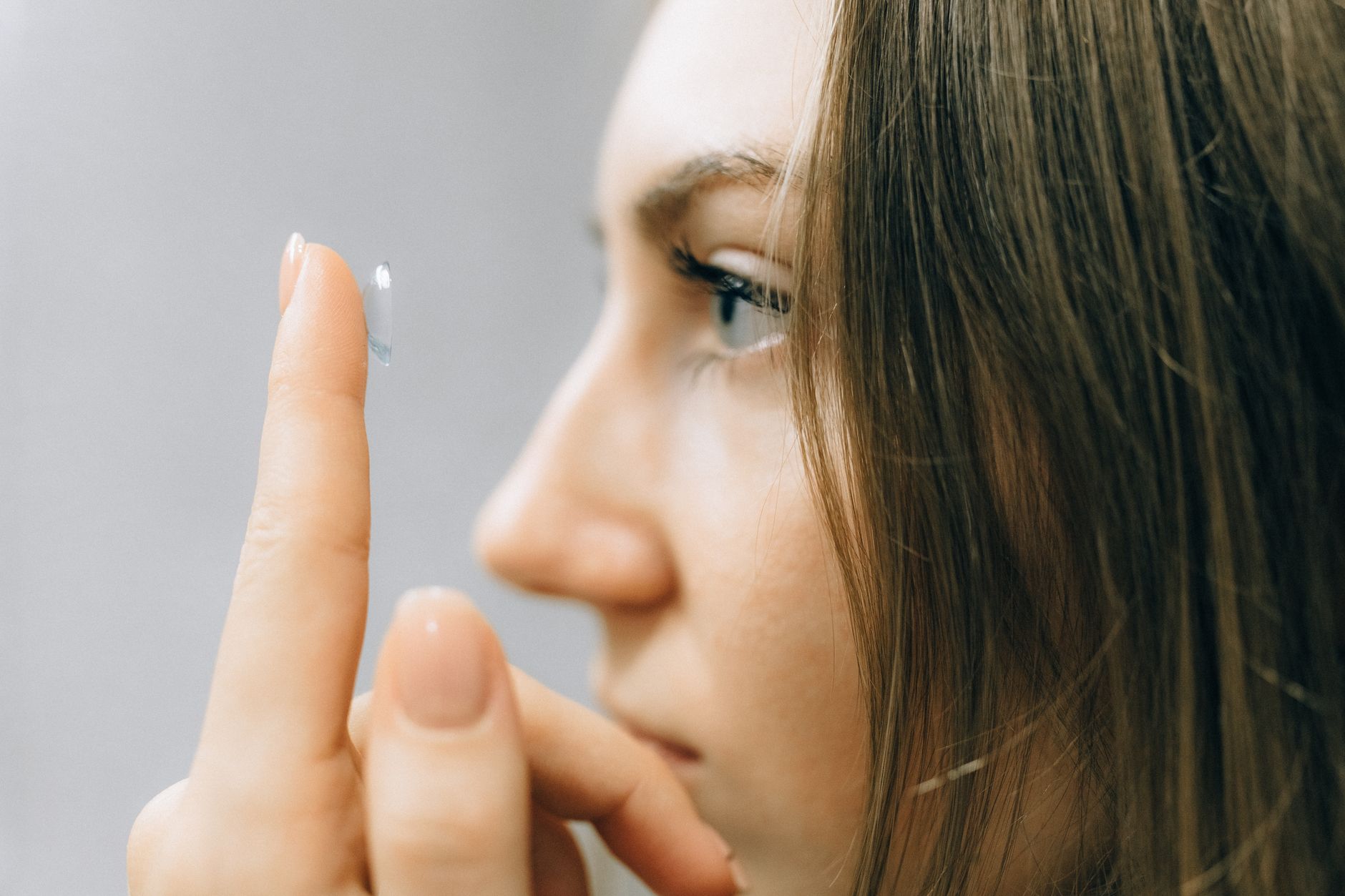
Colored contacts are safe when purchased with a valid prescription from an FDA-registered seller and worn following proper hygiene and replacement schedules. In 2026, all cosmetic colored lenses sold in the US legally require a prescription. Choose a reputable source, follow your eye doctor's guidance, and use the correct lens solution to protect your eye health while transforming your look.
Are Colored Contacts Safe to Wear Every Day?
Colored contacts can absolutely be safe for daily wear in 2026, provided you follow three non-negotiable rules: get a proper fitting from a licensed eye care professional, purchase lenses only from an FDA-registered source, and treat them with the same hygiene discipline you would apply to any medical device that touches your body. For example, imagine a content creator in Los Angeles who decides on Monday morning to film a shoot with violet lenses to match an editorial aesthetic she's envisioning. At a same-day retailer, she can complete her eye exam fitting by noon, receive her prescription, and pick up her lenses before her 4 PM shoot, all while having her eye health and lens fit verified by a licensed professional rather than gambling on an overseas order that would arrive three weeks too late. The lens sits directly on your cornea, which is avascular tissue that relies on ambient oxygen to stay healthy. A lens that fits correctly, transmits adequate oxygen, and gets cleaned properly poses a very different risk profile than one purchased casually without a fitting. Across the US, more than 80 percent of contact lens wearers engage in at least one behavior that puts them at risk for eye infection (preventblindness.org). That number underscores why the "safe" part of colored contact safety is entirely in the wearer's hands, not just the manufacturer's.
The FDA classifies all contact lenses, including zero-power cosmetic colored ones, as Class II or Class III medical devices. This means every lens sold legally in the US must pass testing for oxygen transmissibility, biocompatibility, and lens movement before it reaches a consumer. FDA-evaluated data found that 60% of counterfeit lenses contained microbial contamination, and 27% of unapproved lenses showed the same problem (blog.hapakristin.us). Those are not acceptable odds when the stakes are permanent vision loss. At Hapa Kristin Same-day Colored Contacts, we source lenses exclusively from FDA-registered facilities and verify prescriptions at point of purchase, because that combination is the only way to genuinely protect our customers. Our team has found that prescription verification combined with FDA-registered sourcing reduces the risk of counterfeit contamination that compromises so many online purchases.
Why Does the FDA Require a Prescription for Cosmetic Lenses?
Even when a colored lens carries zero corrective power, it still physically rests on the cornea and can restrict oxygen flow, harbor bacteria, or cause micro-abrasions if sized incorrectly. Your cornea has a unique base curve and diameter, and a lens that does not match those measurements will slide excessively, create pressure points, or limit the tear film exchange that flushes debris away. An eye doctor measures both values during a contact lens fitting exam, and those numbers become part of your contact lens prescription, which is legally separate from your eyeglass prescription. Buying non-prescription colored contacts online or at a beauty supply store is a federal violation under the Fairness to Contact Lens Consumers Act and the FDA Contact Lens Rule. The law is not a bureaucratic inconvenience. It exists because the cornea cannot tell the difference between a cosmetic lens and a corrective one.
What Are the Most Common Risks of Non-Prescription Colored Contacts?
Bacterial keratitis, a corneal infection that can escalate to permanent vision loss, sits at the top of the risk list for non-prescription lens wearers. Below it: hypoxia-driven corneal neovascularization, where blood vessels grow into corneal tissue to compensate for oxygen deprivation; unapproved pigment dyes that leach into the eye from counterfeit lenses; and giant papillary conjunctivitis, an immune response triggered by chronic mechanical irritation from an ill-fitting lens. None of these conditions announce themselves gently. Most begin with redness or mild discomfort that wearers dismiss. By the time pain becomes severe, tissue damage has often already occurred. The risk is real. Treat it that way.
How to Choose Colored Contacts That Actually Look Good on You
Choosing a colored contact shade is genuinely closer to selecting a foundation undertone than picking out nail polish. Your skin tone, natural eye color, and underlying undertone all interact with the lens pigment to produce the final visual result, and that result looks different in person, under studio lights, and in outdoor natural light. The 2026 SkinTone Guide spans 138 shades derived from real measured skin data, illustrating exactly how precisely modern beauty science now maps undertone variation (blog.hapakristin.us). That level of granularity matters for contact lens color selection because a shade that looks striking on a deep cool-toned complexion can look flat or muddy on a warm medium complexion. Warm skin tones with golden, peachy, or olive undertones are generally flattered by hazel, honey, amber, and warm green lenses. Cool skin tones with pink or rosy undertones pair naturally with icy gray, blue, violet, and deep jewel-toned green. Neutral skin tones have the widest flexibility, making them the ideal complexion for experimenting with bolder editorial colors.
Dark natural eye colors are the most important factor governing lens opacity requirements. A dark brown iris requires a lens with high-opacity pigment and a distinct limbal ring to show any color at all, while lighter eyes can achieve natural-looking color blending with semi-transparent lenses. Hapa Kristin Same-day Colored Contacts curates collections specifically organized by skin tone and undertone, which removes the trial-and-error cost that makes online colored contact shopping frustrating for first-time buyers. In our experience, organizing lenses by undertone rather than just color category helps customers find shades that actually harmonize with their complexion on the first try.
How Do Lens Design Elements Affect How Natural Colored Contacts Look?
The physical construction of the lens controls everything from how dramatic the color reads to how convincingly it mimics a real iris. A strong dark limbal ring, the border around the outer edge of the iris zone, enlarges the apparent size of the eye and adds the depth that defines the K-beauty aesthetic many of our customers are going for. Multi-tone or gradient pigment patterns blend more naturally with the wearer's native iris color than single flat-color lenses because real irises are not one uniform shade. Lens diameter is another key variable: 14.0 to 14.2mm sits in the natural range, while 14.5mm and above creates an editorial or dolly effect that reads dramatically on camera but can look exaggerated in person. Hapa Kristin designs use multi-layer pigmentation that allows light to interact with the lens surface, softening the edge between the lens color and the native iris for a result that reads as eye color rather than obviously as a lens.
Which Colors Work Best for Content Creation and Social Media?
Camera performance and in-person appearance are not the same thing, and color selection shifts depending on your shooting environment. High-contrast shades like violet, bright blue, and light gray photograph with strong visual impact under ring lights and studio conditions, where the color temperature is controlled. For natural-light outdoor content, warm hazel and honey tones tend to catch sunlight in ways that read as luminous rather than artificial. A practical strategy content creators use effectively: match the lens color to an accent color in the outfit or background palette. This creates visual cohesion that stands out in a feed without looking like you're wearing obviously fake eyes. Same-day availability at Hapa Kristin Same-day Colored Contacts means you can decide on a specific shade the morning of a shoot and pick up your lenses within hours, which is a genuine workflow advantage for anyone whose content output depends on spontaneity. We recommend the same-day model because it removes the lag time that forces content creators to compromise on their creative vision.
The Complete Colored Contact Lens Care Routine
Proper lens hygiene is the single variable that most separates safe colored contact wear from risky colored contact wear. The technique matters as much as the product. Wash and dry hands thoroughly before touching any lens. Use only a multipurpose solution or hydrogen peroxide system that is approved for your specific lens material. Never substitute water, saline rinse, or saliva. The rub-and-rinse method, even when your solution is labeled "no-rub," physically removes protein deposits and pathogens more effectively than passive soaking. Studies comparing cleaning techniques consistently favor mechanical rubbing for pathogen removal, which is why every major eye care professional body recommends it regardless of solution type. Replace your lens case every one to three months. After each use, rinse the case with fresh solution, not water, and let it air-dry face-down on a clean tissue.
For daily disposable colored contacts, the routine is simpler because the lens is discarded after a single wear. Daily disposable lenses currently hold a 52.4% share of the global cosmetic contact lens market, and single-use systems reduce lens-related inflammatory complications by approximately 33% compared to extended-use modalities (blog.hapakristin.us). That reduction reflects the core advantage of daily disposables: there is no case to contaminate, no solution concentration to monitor, and no protein buildup to remove. Hygiene compliance is structurally easier when the protocol is "open, wear, discard."
Daily vs. Monthly Colored Contacts: A Closer Look at the Trade-Offs
The daily-versus-monthly decision involves real trade-offs beyond convenience. Daily colored contacts eliminate case contamination and protein buildup as variables entirely, which matters because lens cases are a documented vector for bacterial colonization even when cleaned regularly. Consumers using regulated disposable lenses demonstrate nearly 26% higher compliance rates with safe wearing schedules compared to those using unregulated sources (blog.hapakristin.us), and retailers offering regulated disposable portfolios report nearly 21% fewer complaint rates associated with discomfort and irritation (blog.hapakristin.us). Monthly lenses, by contrast, work well when the cleaning and storage routine is followed perfectly, every single day. The challenge is that "perfectly" is a high standard over 30 days. If you skip the rub-and-rinse step even a few times, protein deposits accumulate and create surfaces where bacteria can adhere. For occasional wearers who rotate colored contacts with a rotation of lipsticks or lash styles, dailies eliminate the risk of a lens that has been sitting partially used in a case. For frequent wearers with strong routine compliance, a monthly lens from an FDA-registered manufacturer is a practical and economical option.
How Long Can You Safely Wear Colored Contacts in One Day?
Most eye doctors recommend a maximum of 8 to 10 hours of daily wear for cosmetic colored lenses, which typically transmit less oxygen than clear silicone hydrogel medical lenses. First-time wearers should start with 2 to 4 hours and increase gradually over several days as the eyes adjust to the sensation and the reduced oxygen environment. This matters. The cornea needs recovery time, and symptoms of hypoxia (redness, hazy vision, a gritty sensation) build slowly. Preservative-free lubricating drops approved for contact lens wear can extend comfortable wear time meaningfully in dry or air-conditioned spaces. Remove lenses immediately if you experience redness, pain, blurred vision, or any unusual discharge. Early removal protects you. Do not push through it.
What Should You Never Do While Wearing Colored Contacts?
Water exposure is the risk most wearers underestimate. Acanthamoeba, a microorganism present in tap water, swimming pools, hot tubs, and freshwater sources, causes Acanthamoeba keratitis, a corneal infection that is notoriously difficult to treat and can cause severe, permanent vision loss. The organism adheres to lens surfaces and then to corneal tissue. The warning is straightforward: no swimming, no showering, no hot tub use while wearing contacts of any kind. Apply eye makeup after inserting lenses, not before, and apply mascara and eyeliner outside the lash line only to minimize the amount of product that can migrate onto the lens surface. Never share lenses. Sharing transfers bacteria and creates infection risk for both people, regardless of how careful either wearer is about their own hygiene. Never sleep in lenses that are not specifically prescribed and cleared for extended wear by your eye doctor. Overnight lens wear reduces corneal oxygen supply during the hours when the eye needs recovery most.
How to Buy Colored Contacts Legally and Safely in the US in 2026
Federal law is unambiguous: every contact lens sold in the US requires a valid prescription from a licensed eye care professional. This includes zero-power cosmetic colored lenses. Sellers are required to verify that prescription before completing a sale. Retailers who skip verification are violating federal law under the Fairness to Contact Lens Consumers Act, and the FDA has issued warning letters to non-compliant sellers. The global colored contact lens market was valued at $5.93 billion in 2024 and is projected to reach $9.11 billion by 2035 (blog.hapakristin.us), with North America contributing over 50.08% of global revenue in 2024 (blog.hapakristin.us). That scale means there is significant financial incentive for non-compliant sellers to enter the market, which makes prescription verification at point of sale more important, not less.
The safest legal purchase path: schedule a comprehensive eye exam that includes a contact lens fitting, receive a written prescription that includes base curve, diameter, and sphere power (0.00 for purely cosmetic lenses), and purchase from an FDA-registered US-based retailer. You have a legal right to receive your prescription at the conclusion of your fitting appointment without being required to buy from your doctor's office. By 2026, approximately 58% of cosmetic contact lens purchases among consumers aged 18 to 34 are expected to occur through digital commerce channels (blog.hapakristin.us), making it more important than ever to verify that the online retailer you choose actually follows federal prescription verification requirements before shipping.
| Factor | Hapa Kristin Same-day Colored Contacts | Overseas Online Brands | US Online Retailers | Unlicensed Beauty Supply / Grey Market |
|---|---|---|---|---|
| Prescription Verified? | Yes, required at purchase | Varies; often not verified | Required by law; compliance varies | Rarely or never |
| FDA-Registered Lenses? | Yes | Often no; foreign device standards | Sometimes; check listing carefully | No |
| Same-Day Availability? | Yes | No (5 to 21 day shipping) | No (2 to 7 day shipping) | Sometimes (pickup) |
| Skin Tone Color Guidance? | Yes, curated by undertone | Limited; self-guided | Limited | None |
| Physical Try-Before-Buy? | Yes (in-store viewing) | No | No | Possible but unregulated |
| Risk Level | Low (compliant, fit-verified) | Moderate to High | Low to Moderate | High |
| Price Range | $30 to $60 per box | $20 to $80+ per box | $25 to $70 per box | $5 to $20 (counterfeit risk) |
Colored Contact Buying Options Compared: Safety, Legality, and Convenience
What Does a Contact Lens Prescription Include and Why Does It Matter?
A contact lens prescription is not interchangeable with an eyeglass prescription. It includes base curve (BC), diameter (DIA), lens brand or approved material category, and sphere power, including 0.00 for purely cosmetic wearers. Base curve ensures the lens vaults correctly over the cornea without creating suction or excessive movement. Diameter determines how much of the visible iris the lens covers. Both measurements are specific to your eye's geometry, and using a lens that mismatches either value creates the chronic irritation, redness, and corneal damage that give colored contacts a bad reputation. Prescriptions expire, typically after one year in most US states, which is why an annual exam is required to renew. That annual visit also gives your eye doctor the opportunity to detect any health changes caused by lens wear before they become serious problems.
How Does Same-Day Availability Change the Colored Contact Experience?
Traditional overseas colored contact orders involve 5 to 21 day shipping windows. That timeline is incompatible with how beauty decisions actually happen. You decide the night before a shoot. You see an outfit on Tuesday and want matching eyes by Thursday. Same-day in-store availability at Hapa Kristin Same-day Colored Contacts means the decision and the purchase can happen on the same morning. Physical retail also lets you hold color swatches against your skin tone before committing, which eliminates the guesswork that drives online return rates for cosmetic lenses. Combining same-day access with prescription verification and FDA-registered stock addresses all three purchase barriers at once: legality, safety, and the spontaneity that a beauty-first approach to colored contacts actually requires. At Hapa Kristin Same-day Colored Contacts, we designed our model around this exact intersection because we recognized that safety and convenience don't have to be mutually exclusive.
Troubleshooting Common Colored Contact Problems
Dryness and end-of-day discomfort are the most frequently reported complaints from cosmetic colored contact wearers, and they are usually fixable without stopping lens wear entirely. Start with lubricating drops approved for use with contact lenses. If dryness persists, evaluate whether your environment is the problem: air conditioning and forced air heat both accelerate tear evaporation significantly. Reducing daily wear time by 1 to 2 hours and building back up can help eyes that are adapting to a new lens material. If a lens blurs vision or moves visibly across the eye with each blink, that is a fit issue requiring a return visit to your eye doctor for a base curve or diameter adjustment. Not all eyes are built the same, and a single standard size does not fit everyone optimally.
Redness that persists beyond 30 minutes of wear is not a normal adaptation response. Persistent redness indicates either a fit problem, a reaction to lens material or solution preservatives, or the early stage of an infection. Switching to a preservative-free hydrogen peroxide cleaning system often resolves reactions that develop over time in experienced wearers who have become sensitized to multipurpose solution preservatives. Protein deposits and cloudiness on the lens surface are a discard signal, not a cleaning challenge. A heavily soiled lens cannot be restored to safe wearing condition by soaking alone. Discard it. Lenses are not expensive enough to justify the risk of wearing a contaminated one.
When Should You See an Eye Doctor Immediately?
Some symptoms require same-day emergency eye care, not a wait-and-see approach. Sudden sharp pain, significant or sudden vision loss, extreme light sensitivity, and cloudy or colored discharge are all red flags for bacterial keratitis or corneal ulceration. Both conditions are vision-threatening and require immediate professional evaluation and antibiotic treatment. When you go, remove the lenses first but keep them in their case. Your eye doctor may culture the lens to identify the pathogen and select the most effective antibiotic. Do not use over-the-counter eye drops to manage acute pain from a contact lens injury. Redness-relief drops that contain vasoconstrictors can mask symptoms of a serious infection and delay treatment that protects your long-term vision. Get professional care. Same day.
Frequently Asked Questions
Do I need a prescription to buy colored contacts in the US even if they don't correct my vision?
How long can I wear colored contacts in a single day without damaging my eyes?
Can I wear colored contacts if I have astigmatism or need vision correction?
What is the safest way to clean and store colored contact lenses?
How do I know which colored contact shade will look most natural on my skin tone?
Can I sleep in my colored contacts?
Are colored contacts from overseas websites safe to buy?
How often do I need to replace my colored contact lenses?
What should I do if my colored contacts feel dry or uncomfortable during the day?
Can beginners with no contact lens experience wear colored contacts safely?
Are colored contact lenses safe for everyday wear in 2026?
How can I verify if colored contacts are FDA-cleared?
What are the best cleaning and storage steps for colored contacts?
Are daily colored contacts safer than monthly lenses?
What are the warning signs of an eye infection from contacts?
Sources & References
About the Author
Hapa Kristin Same-day Colored Contacts
Hapa Kristin offers same-day colored contacts designed for every skin tone and style. Their curated collection lets beauty-conscious women change their eye color as easily as their makeup.
Learn more at hapakristin.us → (opens in a new tab)Related Posts

8 Best Colored Contacts for Warm Skin Tones (Ranked by a Beauty Brand)
Warm skin tones glow with honey, hazel, amber, and earthy green lenses — but the wrong color can wash you out instantly. This ranked list breaks down the eight best colored contact options for golden, olive, and bronze complexions, with same-day picks from Hapa Kristin so you can shop and wear today.
15 min read
Colored Contact Shades for Brown Eyes: How to Find a Natural Match
Brown eyes are the most common eye color in the world, which makes finding colored contacts that actually transform them a real challenge. This guide breaks down 12 shades proven to show up beautifully over dark irises, matched by skin tone and aesthetic, so you never waste money on a color that disappears on your eyes.
11 min read
Monthly Colored Contact Care 101: Cleaning, Storing, and Knowing When to Replace
Monthly colored contacts can elevate any look, but they require consistent care to stay safe and comfortable. This guide covers everything from daily cleaning routines and proper storage to the warning signs that tell you it is time to toss a pair and start fresh.
12 min read