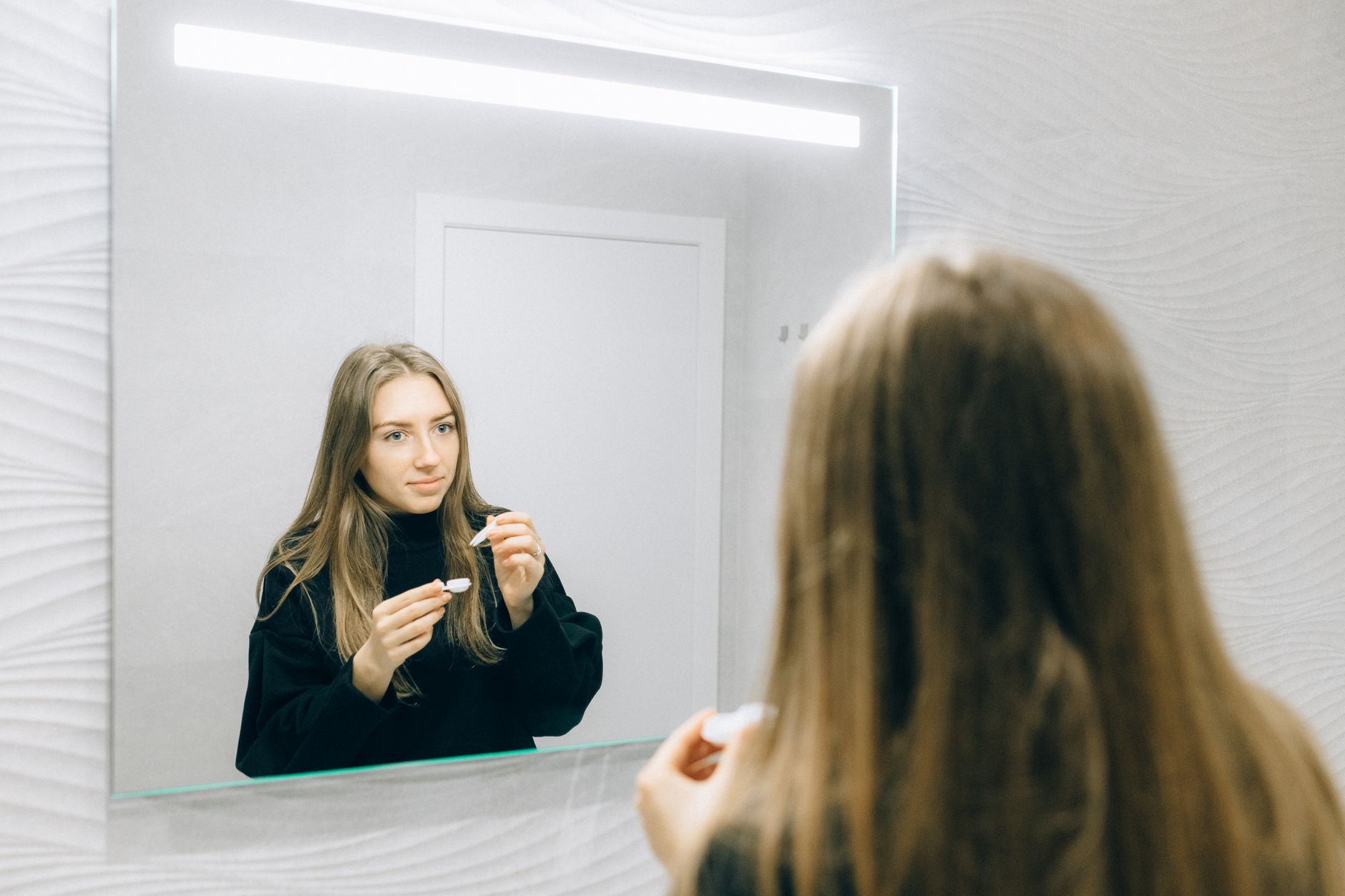
Daily vs Monthly Colored Contacts: Cost, Comfort, Convenience, and Which Is Right for You
Daily colored contacts are the best choice for occasional wearers who want zero maintenance, while monthly lenses save money for people who wear them four or more times per week. Dailies cost roughly $1 to $3 per pair; monthlies average $15 to $40 per lens with solution costs added (blog.hapakristin.us). Your lifestyle decides the winner.
What Is the Real Cost Difference Between Daily and Monthly Colored Contacts?
Cost is almost always the first question, and the honest answer is: it depends entirely on how often you wear lenses. Monthly colored contacts typically cost $15 to $40 per lens at launch, but that upfront number misleads most first-time buyers (blog.hapakristin.us). The annual picture tells a clearer story. According to current pricing data, daily contact lens wearers spend an average of $757 per year while monthly lens wearers spend around $253 per year (lenspricer.com). Infrequent wearers flip that math entirely. Hapa Kristin's monthly colored contacts are priced at $30 to $60 per box (blog.hapakristin.us), which positions them as an accessible entry point into monthly cosmetic lenses without the premium pricing some brands charge.
How to Calculate Your True Per-Wear Cost
The per-wear cost framework cuts through all the noise. Take your monthly lens pair price, add your monthly solution cost (typically $10 to $20), then divide by the number of days you actually wear lenses that month (blog.hapakristin.us). A $30 lens pair plus $15 in solution divided across 20 wear days equals $2.25 per wear, which is directly comparable to many daily options (blog.hapakristin.us). The break-even point sits around 4 wears per week. Below that frequency, daily lenses almost always win on cost. At or above that frequency, monthly lenses pull ahead on value. Track your actual wear frequency for one month before committing to a subscription or bulk purchase.
Hidden Costs Most Buyers Overlook
The sticker price is just the beginning. Monthly lens wearers need multipurpose solution, a lens case, and ideally an enzyme cleaner for protein deposits, which adds up to $100 to $200 in accessories annually (blog.hapakristin.us). Both daily and monthly wearers in the United States are legally required to have a valid prescription from a licensed eye care professional before purchasing any colored contacts, including purely cosmetic non-corrective lenses. That eye doctor visit carries its own cost. Buying cheap overseas lenses without FDA clearance might look like a bargain, but the potential medical costs from corneal abrasions or infections far exceed any savings. Consumers using regulated disposable lenses show nearly 26% higher compliance rates with safe wearing schedules compared to those using unregulated sources (blog.hapakristin.us), which translates directly into fewer medical visits.
| Lens Type | Avg. Annual Cost | Solution/Accessories | Best For | Prescription Required |
|---|---|---|---|---|
| Daily colored contacts | $757 | None | Occasional wearers, travel, events | Yes |
| Monthly colored contacts | $253 | $100-$200/year | Frequent wearers, consistent look | Yes |
| Bi-weekly colored contacts | $384 | $100-$200/year | Moderate wearers | Yes |
| Hapa Kristin monthly | $30-$60 (blog.hapakristin.us)/box | $100-$200/year | Beauty enthusiasts, same-day access | Yes |
How Do Daily and Monthly Colored Contacts Compare in Comfort?
Daily lenses genuinely are the better choice for comfort and hygiene, and the reason is simple biology. Every pair comes out of a sterile blister pack, free of protein deposits, lipid buildup, and any trace of yesterday's environment. Monthly lenses, by contrast, accumulate biological debris with each wear. Proteins from tear film adhere to the lens surface, reducing oxygen transmissibility and creating a surface that can irritate even healthy eyes over time. This buildup effect is why nightly cleaning is non-negotiable with monthly lenses, not optional. Retailers and distributors who adopted regulated disposable lens portfolios have reported nearly a 21% decline in customer complaint rates linked to discomfort and irritation (blog.hapakristin.us), which reflects the real comfort advantage of fresh-lens systems. Monthly colored lenses also add a pigment layer to the lens structure. When that pigment layer is sandwiched between lens materials rather than printed on the surface facing the eye, it protects comfort significantly. Hapa Kristin's monthly lenses use this pigment-sandwich construction specifically to keep color ink away from the eye surface.
Which Lens Type Is Better for Sensitive Eyes?
Sensitive eyes respond better to daily lenses in most clinical scenarios because there is simply no accumulated debris to trigger irritation. Each wear starts clean. Monthly colored lenses can work well for sensitive eyes, but only with rigorous nightly cleaning, fresh solution every single soak, and strict adherence to the 30-day replacement schedule. Look for lenses rated with high Dk/t oxygen transmissibility values regardless of which schedule you choose. Higher oxygen flow keeps the cornea healthier across longer wear sessions. Preservative-free lens solutions reduce chemical irritation risk for monthly wearers who notice redness or sensitivity after extended wear. Comfort depends more on proper cleaning, storage, and how your individual eyes respond to reusable materials than on any single lens specification.
How Long Can You Comfortably Wear Colored Contacts in a Single Day?
Optometrists generally cap daily wear time at 8 to 10 hours for colored contacts regardless of lens type. The color pigment layer in cosmetic lenses reduces oxygen permeability compared to clear lenses of the same material, making that 8-hour guideline especially worth respecting. Never sleep in colored contacts regardless of lens type. Sleeping in lenses dramatically increases microbial keratitis risk, a serious corneal infection that monthly lens wearers extending beyond their replacement schedule are particularly vulnerable to. For long content shoots or all-day events, lubricating eye drops formulated for contact lens wear can extend comfortable hours without compromising lens integrity.
Convenience Comparison: Which Lens Type Fits Your Beauty Routine?
Convenience is where daily and monthly lenses diverge most sharply in day-to-day reality. Dailies are pure grab-and-go: open the blister pack, insert, wear, and toss. No cleaning kit, no case, no overnight ritual. Monthly lenses require a nightly routine of rubbing with solution, rinsing, and soaking in fresh liquid for at least six hours, which takes 2 to 5 minutes but demands consistency every single night. For example, imagine a beauty content creator in Los Angeles who films outfit transitions for TikTok three times a week. She could grab a fresh daily lens in her signature shade on Monday morning, wear it for an 8-hour shoot, then toss it, knowing she avoids the risk of protein buildup ruining her eye comfort mid-content production. Skip that step once and protein deposits build faster than you think. Many wearers actually use both lens types strategically. Dailies work for travel, events, spontaneous color experiments, or any situation where carrying a lens case feels impractical. Monthly lenses anchor a consistent everyday aesthetic and reward wearers who treat their cosmetic contact lens collection the way they treat a curated lipstick drawer. That hybrid approach is genuinely smart buying behavior.
The global disposable contact lens market was valued at USD 8.2 billion in 2026, growing at an 8.1% compound annual growth rate (futuremarketinsights.com), which signals that consumers worldwide are moving toward convenient, hygienic lens formats. Daily disposable lenses alone are projected to hold a 48% share of that market in 2026 (futuremarketinsights.com), confirming that convenience is increasingly the dominant purchase driver.
Which Lens Type Is Better for Content Creators and Social Media Looks?
Content creators who shoot multiple distinct looks in a single week benefit most from daily colored contacts. Switch colors freely without juggling multiple monthly lens cases, solution schedules, and replacement dates. The creative freedom is real. Creators who have a defined signature aesthetic and wear one or two hero shades consistently get better value from monthly lenses. The same-day in-store availability at Hapa Kristin eliminates the 3 to 14 day shipping wait that online-only brands require, which matters most when a shoot opportunity appears the night before. Our team has found that creators who shoot weekly content overwhelmingly prefer the flexibility of having same-day access so they can match a lens color to a look they decided on that morning rather than planning a week in advance.
Safety and Care Requirements for Each Lens Type
Safety is the non-negotiable foundation for any colored contact lens purchase. Daily lenses have the simpler safety profile because fresh sterile lenses eliminate cleaning error entirely. There is no risk of inadequate soaking time, no biofilm accumulating in a neglected lens case, and no temptation to extend the wear period because the lens disposal built into daily use. Monthly lenses require strict adherence to every step of the care chain. Even "no-rub" multipurpose solutions perform significantly better when you physically rub the lens surface before rinsing, as rubbing removes debris that soaking alone cannot dislodge. A valid prescription from a licensed eye care professional is legally required in the United States to purchase any colored contact lenses, including purely cosmetic non-corrective ones. This is federal law, not a retailer policy. Never buy from vendors who skip the prescription requirement, whether that is an unverified Amazon listing or an international site without US regulatory standing. FDA-cleared lenses have undergone safety testing. Counterfeit or unapproved cosmetic lenses have caused corneal abrasions, infections, and in rare cases permanent vision damage. The colored contact lens market was valued at $5.93 billion globally in 2024 (blog.hapakristin.us), with North America contributing over 50.08% of global revenue that same year. The scale of this market means counterfeit products are widespread. Verification matters.
How to Store and Care for Monthly Colored Contacts Correctly
Proper monthly lens care follows a specific sequence that cannot be shortcut. Rub lenses with multipurpose solution for 10 to 20 seconds per side before rinsing, even if your solution label says no-rub. Soak lenses overnight in completely fresh solution, never topping off old liquid, which dilutes the disinfecting agents and allows microbial growth. Replace your lens case every 30 days, not just when it looks dirty. Biofilm develops on case surfaces and transfers directly to lenses during soaking. Keep all lenses and cases away from tap water entirely. Tap water can carry Acanthamoeba, a microorganism linked to Acanthamoeba keratitis, a severe corneal infection that is notoriously difficult to treat and can cause permanent vision loss. Monthly lens wearers who skip even one of these steps compound infection risk across every subsequent wear.
How to Choose the Right Lens Type for Your Lifestyle
Choosing between daily and monthly colored contacts is genuinely a lifestyle decision, not just a budget calculation. Use this framework. Choose daily colored contacts if you wear lenses fewer than 3 times per week, you travel frequently and hate packing care kits, you want to experiment with multiple colors without committing to a box, or you have sensitive eyes that benefit from a fresh lens every session. Choose monthly colored contacts if you wear lenses 4 or more times per week, you have a consistent color preference and a reliable nightly routine, and you want to reduce your overall annual spend on lenses. Your spontaneity factor matters too. Same-day in-store availability at Hapa Kristin means deciding the morning of an event is a real option, not a workaround. First-time lens wearers often do best starting with dailies. Learning insertion and removal with a fresh pair that can simply be discarded if it gets contaminated during a fumbled attempt is less stressful and safer than learning with a monthly lens you need to preserve. Your eye doctor's recommendation is the final word. Specific corneal shapes, dry eye conditions, or astigmatism may make one lens type medically preferable regardless of your lifestyle preference. By 2026, approximately 58% of cosmetic contact lens purchases among consumers aged 18 to 34 are expected to occur through digital commerce channels (blog.hapakristin.us), but same-day in-store access remains the fastest route from decision to wear.
Which Hapa Kristin Lenses Match Your Wear Pattern?
Hapa Kristin's monthly colored contacts are built for beauty enthusiasts who want a consistent, curated color identity they can return to across multiple wears. The shade range is developed using personal color science principles, with tones selected to complement warm, cool, and neutral skin undertones rather than simply replicating popular colors without context. Hapa Kristin holds a 4.5 out of 5 rating for natural look and comfort quality (blog.hapakristin.us), reflecting a design philosophy that prioritizes wearability over dramatic novelty. Whether the goal is a subtle everyday enhancement for a natural-looking colored contacts effect or a bold statement shade for content creation, the range covers both ends of the spectrum. Same-day retail availability means building a 2 to 4 color monthly rotation is possible without waiting for shipping cycles or planning purchases days in advance.
Frequently Asked Questions
Can I switch between daily and monthly colored contacts depending on the occasion?
Do I need a prescription for non-corrective colored contacts in the United States?
How many times can I realistically wear a monthly colored contact lens before replacing it?
Are daily colored contacts available in as many colors as monthly lenses?
What happens if I accidentally sleep in my colored contacts?
How do I know if a colored contact lens brand is FDA-cleared and safe to buy?
Can I wear colored contacts if I already wear prescription eyeglasses or have astigmatism?
Where can I buy colored contacts the same day without waiting for shipping?
Which option is more comfortable for sensitive eyes?
How do daily and monthly lenses compare for travel?
What's the risk of infection with daily vs monthly contacts?
How do I choose between daily and monthly colored contacts?
Are daily colored contacts cheaper overall than monthly ones?
Sources & References
About the Author
Hapa Kristin Same-day Colored Contacts
Hapa Kristin offers same-day colored contacts designed for every skin tone and style. Their curated collection lets beauty-conscious women change their eye color as easily as their makeup.
Learn more at hapakristin.us → (opens in a new tab)Related Posts
8 Best Colored Contacts for Warm Skin Tones (Ranked by a Beauty Brand)
Warm skin tones glow with honey, hazel, amber, and earthy green lenses — but the wrong color can wash you out instantly. This ranked list breaks down the eight best colored contact options for golden, olive, and bronze complexions, with same-day picks from Hapa Kristin so you can shop and wear today.
15 min read
Everything You Need to Know About Colored Contact Safety, Comfort, and Care in 2026
Colored contacts can transform your entire look in seconds, but wearing them safely requires knowing the rules, the risks, and the right care routine. This guide covers everything from FDA regulations and prescription requirements to choosing a flattering color for your skin tone and keeping your lenses comfortable all day.
16 min read
Colored Contact Shades for Brown Eyes: How to Find a Natural Match
Brown eyes are the most common eye color in the world, which makes finding colored contacts that actually transform them a real challenge. This guide breaks down 12 shades proven to show up beautifully over dark irises, matched by skin tone and aesthetic, so you never waste money on a color that disappears on your eyes.
11 min read