
The Complete Guide to Colored Contacts for Warm Skin Tones: Honey, Hazel, Green, and Beyond
For warm skin tones, the most flattering colored contacts are honey, hazel, warm green, and amber shades. These colors share golden or earthy undertones that harmonize with golden, olive, and caramel complexions. Honey lenses enhance natural warmth. Hazel adds depth. Warm green creates striking contrast without looking jarring or artificial.
For warm skin tones, the most flattering colored contacts are honey, hazel, warm green, and amber shades. These colors share golden or earthy undertones that harmonize with golden, olive, and caramel complexions. Honey lenses enhance natural warmth. At Hapa Kristin Same-day Colored Contacts, honey lenses consistently deliver the most universally flattering result across all warm skin depths. The golden-amber pigmentation mirrors the natural radiance already present in golden and caramel complexions. Hazel adds depth. Warm green creates striking contrast without looking jarring or artificial.
What Makes a Skin Tone 'Warm' and Why Does It Matter for Colored Contacts?
Warm skin tones carry golden, peachy, or yellow undertones beneath the surface of the skin. This undertone quality is not about how light or dark your complexion is. It is about the hue family sitting underneath. You can have fair warm skin, deep warm skin, or anything in between, and the same undertone principle applies across all of them. The reason undertone matters for colored contacts is simple: the lens sits at the focal point of your face, right at eye level, and it introduces a new color into your overall palette. When that color belongs to the same warm family as your skin, the result reads as natural and harmonious. When it clashes, you get a visually unsettling effect that no filter fully fixes.
The cosmetic contact lens market reflects growing consumer awareness of this exactly. The global cosmetic contact lenses market is valued at USD 1.65 billion in 2024 and is projected to reach approximately USD 2.75 billion by 2030, growing at a CAGR of 8.9% (strategicmarketresearch.com). That growth is driven in large part by beauty-conscious consumers who are treating lenses as a makeup category, which means color compatibility with skin tone is no longer a niche concern. It is the central purchasing decision.
How to Identify Your Warm Undertone Quickly
Before you buy a single lens, nail down your specific warm undertone. The process takes about two minutes. Check the veins on the inside of your wrist in natural daylight. Green or olive-colored veins indicate warm undertones. Blue or purple veins indicate cool. The jewelry test is equally reliable: hold a piece of gold jewelry against your bare skin, then a piece of silver. Warm undertones glow against gold and look slightly washed out against silver.
Warm undertones divide into three sub-families. Each responds differently to lens colors. Golden warm tones have a yellow-gold cast and are most common in East Asian, South Asian, and many Latina complexions. Peachy warm tones carry a soft orange-pink base, common in fair Celtic and some Mediterranean skin. Earthy warm tones are richer and more saturated, typical of caramel, bronze, and deep olive complexions. Identifying your sub-family matters greatly. Peachy warm skin handles rose gold lenses beautifully. Earthy warm skin reaches its peak with deep amber and copper. Seasonal color analysis maps this precisely: golden and peachy warm tones fall into the Spring palette, while earthy and deeper warm tones align with the Autumn palette. Both spring and autumn palettes share warm pigment families, muted-to-rich saturation, and earthy earth-tone harmony, and those are exactly the lens colors that work.
Why Warm Undertones Respond Differently to Lens Colors
The science behind undertone-lens harmony comes down to light absorption and pigment contrast. Warm skin absorbs and reflects light in the yellow-red spectrum. When a lens color shares that same spectral family, the eye and the skin appear unified. When a lens pulls strongly from the blue or violet spectrum, it introduces a competing light-reflection pattern at the most visually prominent point on the face. This is what creates the "uncanny valley" effect that many warm-toned women experience when trying icy gray or cool lilac lenses: the lens looks technically fine in isolation but wrong in context.
Warm green lenses are a strong example of this principle in action. Cool blue-greens absorb light in the teal and cyan range, which conflicts with golden undertones. Warm greens, specifically olive, forest, and khaki variants, absorb and reflect in the yellow-green range, which shares pigment territory with the warm skin family. This is why warm green lenses create a striking but harmonious look on olive and caramel complexions, while the same design in a cool minty green would look jarring on the same face. The pigment interaction is measurable, not just aesthetic opinion. Lens opacity also enters the equation here: fair warm skin can sometimes use semi-transparent lenses, but deeper warm complexions require full-pigment opaque designs for the color to actually register against a dark iris.
The Best Colored Contact Lens Colors for Warm Skin Tones
Not every warm-friendly color performs equally across all warm skin depths. The matrix below gives you a practical reference, but the underlying logic is worth understanding so you can make smart decisions on new colors as trends evolve. Colors that share warm pigment families, specifically anything in the honey, amber, hazel, earthy green, copper, and rose gold range, create visual cohesion with golden and caramel complexions. Colors that pull cool, like silver-gray, icy blue, and violet, require more careful selection and typically only work on fair warm or light olive complexions where the contrast is manageable.
| Lens Color | Best Warm Skin Depth | Opacity Level Needed | Occasion Fit | Makeup Pairing |
|---|---|---|---|---|
| Honey | All warm depths (fair to deep) | Semi to fully opaque | Everyday, natural looks | Bronze, terracotta, nude |
| Hazel | Medium to deep warm | Fully opaque for dark eyes | Everyday to elevated | Warm brown, copper, gold |
| Warm Green | Medium warm, deep warm | Fully opaque | Elevated, social content | Copper liner, gold shadow |
| Amber / Brown | All warm depths | Semi to fully opaque | Everyday, natural depth | Neutral, warm nudes |
| Rose Gold | Fair warm, medium warm | Fully opaque | Events, content creation | Peachy nudes, rose tones |
| Copper | Medium to deep warm | Fully opaque | Bold, editorial, nights out | Bronzed skin, nude lip |
| Warm Gray (Greige) | Fair warm, medium warm | Fully opaque | Elevated, minimalist looks | Cool-neutral makeup |
Honey Lenses: Why They Are the Gold Standard for Warm Skin
Honey lenses are the universally flattering choice for warm skin tones because their golden-amber pigmentation sits squarely in the same spectral family as warm skin's natural radiance. A fair golden complexion wearing honey contacts looks like her eyes have been sun-kissed. A deep caramel complexion wearing opaque honey lenses gets a warm, luminous lift without any jarring contrast. The honey color does not compete with the skin. It borrows from the same palette and amplifies it.
Hapa Kristin Same-day Colored Contacts carries honey as a core SKU precisely because it is the entry point color for warm-tone wearers who want to enhance their look without committing to drama. The color reads differently across skin depths, but it reads well on all of them. For content creation specifically, honey lenses photograph warmly under both natural and studio light, which means they translate consistently from mirror to camera without heavy editing correction. Pair honey lenses with terracotta eyeshadow and a bronzed cheek and you have a five-minute look that photographs like a full beat. In our experience with customers creating content, honey lenses photograph warmly under both natural and studio light, which means they translate consistently from mirror to camera without requiring heavy editing correction.
Hazel and Green Lenses: Adding Depth and Drama
Hazel lenses sit at the intersection of green and golden-brown, which makes them inherently warm-tone-compatible. The green component in hazel lenses is not a cool teal. It is an earthy, yellow-inflected green that belongs to the same warm palette as olive skin and bronze highlights. This is why hazel on medium to deep warm skin creates striking depth rather than jarring contrast. On fair warm skin, hazel reads as a natural eye color shift. On deep warm caramel skin with fully opaque lenses, hazel becomes a dimensional statement.
Hazel-green blends deserve special attention. They shift with lighting. Most solid lens colors cannot do this. In warm indoor light, a hazel-green lens pulls its brown-gold frequencies forward. In natural daylight, the green frequencies become more visible. This multidimensional quality is what makes hazel-green blends particularly compelling for content creators who shoot in varied lighting conditions. A single lens delivers a different visual effect across different environments, which adds variety to a feed without requiring multiple lens changes. Warm green in its earthy, olive, and forest variants extends this logic further. On a warm-toned woman with a caramel complexion, a full opaque warm green lens creates a look that is unexpected but completely harmonious, because both the skin and the lens are drawing from the same yellow-green earthy pigment family.
Bold Options: Rose Gold, Copper, and Warm Gray
Rose gold lenses incorporate peachy-warm pigmentation that flatters fair golden and medium warm complexions by introducing a soft metallic warmth to the eye without pulling cool. Copper lenses go further, offering rich orange-amber pigmentation that pairs beautifully with bronzed skin and a nude lip for an editorial look that feels current rather than costumey. Warm gray, specifically the greige and taupe-gray variants rather than cool silver-gray, adds a minimalist elevated quality to fair and medium warm complexions without the undertone conflict that classic gray lenses create.
These fashion-forward colors require higher opacity to render on dark base eye colors, and that is worth factoring into your budget planning. Colored contact lenses dominate the cosmetic lens market at 48.6% share globally (strategicmarketresearch.com), and within that category, the trend toward fashion colors like copper and rose gold is accelerating alongside social media beauty content growth. By 2026, approximately 58% of cosmetic contact lens purchases among consumers aged 18 to 34 are expected to occur through digital commerce channels, representing nearly USD 0.96 billion in associated market activity (strategicmarketresearch.com). That shift reflects buyers who are researching color carefully before purchasing, which is exactly the mindset these bold colors demand.
How to Match Colored Contacts to Your Specific Warm Skin Depth
Most lens brands skip the shade-by-shade guide. It is actually the most useful tool for first-time buyers. Fair warm skin, which includes light golden, peachy, and soft olive tones, works well with semi-transparent honey, light hazel, and soft enhancer-style greens. The lighter pigmentation of these lenses complements the delicacy of fair warm complexions without overpowering them. Medium warm skin, including golden beige and classic olive tones, has the widest range of compatible lens colors: opaque honey, hazel, warm green, amber, rose gold, and even copper all land well here. Medium warm skin can handle both natural and bold lenses without either looking washed out or overwhelming. Deep warm skin, which covers caramel, bronze, and rich brown tones, requires fully opaque lenses for any color to register. The most effective colors at this depth are honey, rich hazel, copper, and warm green. Lighter fashion colors like rose gold and warm gray can work, but require a premium opaque lens with strong pigment density to show up clearly against a deep iris.
What Is the Difference Between Enhancer and Opaque Lenses?
The distinction between enhancer and opaque lenses is the most consequential technical decision a colored contact buyer makes. Enhancer lenses are semi-transparent. They work by intensifying or subtly shifting the natural eye color. If your eyes are already a light brown, hazel, or green, an enhancer adds dimension and richness. But if your natural eye color is dark brown or black, an enhancer lens is essentially invisible. The dark iris simply shows through the semi-transparent pigmentation and you see no color change at all.
Opaque lenses contain full pigmentation that covers the natural iris entirely. This is what most warm-toned women with naturally dark eyes actually need. Modern opaque lens technology has advanced significantly. Earlier designs had flat, uniform coverage. Check opacity specifications carefully in product listings before purchasing. This is the most consequential technical decision a warm-toned contact lens buyer makes. Current multi-layered opaque lenses use a base pigment layer, a secondary blend layer, and a limbal ring design to create realistic depth and graduation that mimics how natural eye color actually looks. The result is that even a fully opaque honey or hazel lens can appear natural and dimensional rather than painted-on. Lighter or translucent lenses, to be direct about this, simply will not cover a dark brown iris well enough to show any meaningful color change. Buying a semi-transparent lens for dark eyes is the most common and most avoidable purchasing mistake in this category. Always check opacity specifications in the product listing before buying.
Safety, Comfort, and the Prescription Requirement for Colored Contacts in the US
This section exists because it matters more than any color recommendation. In the United States, all contact lenses, including purely cosmetic non-corrective colored contacts, are classified as medical devices by the FDA and legally require a valid prescription from a licensed eye care professional. This is not a technicality. It is a federal consumer protection measure. Purchasing contacts without a prescription from unauthorized sellers is illegal. This carries real health risks. These include corneal ulcers, bacterial infection, and permanent vision damage. A valid prescription for colored contacts includes your base curve measurement and lens diameter, even if your vision correction power is zero. Those measurements ensure the lens fits your specific corneal dimensions, preventing fit-related injury that can occur even when the lens is visually comfortable for a few hours.
Daily disposable lenses dominate the cosmetic lens format at 52.4% market share globally (strategicmarketresearch.com), and for good reason. Dailies eliminate the infection risk that comes with overnight storage and reuse, making them the recommended format for first-time wearers and anyone using lenses occasionally for events or content shoots.
Why Do Colored Contacts Require a Prescription Even Without Vision Correction?
The FDA classifies all contact lenses as Class II or Class III medical devices regardless of whether they correct vision. The prescription requirement exists because lens fit is not universal. Your base curve, the measurement of your cornea's curvature, determines whether a lens sits correctly on your eye or shifts, restricts oxygen flow, or causes abrasion. Ill-fitting lenses cause real damage. Corneal abrasion occurs from unfit cosmetic lenses. Hypoxia from reduced oxygen permeability occurs. Bacterial infection from improper fit occurs. All are documented clinical outcomes. A prescription is not a purchasing barrier. It is what ensures the lens you chose in honey or hazel actually behaves safely on your specific eye.
How to Choose a Comfortable Colored Contact Lens for All-Day Wear
Lens comfort for a full day of wear comes down to material science. Silicone hydrogel materials with high Dk/t oxygen transmissibility ratings allow significantly more oxygen to reach the cornea than standard hydrogel lenses. For beauty-focused wearers who may be wearing lenses for six to ten hours during a shoot or event, this matters clinically and comfort-wise. Water content between 38% and 58% (strategicmarketresearch.com) balances moisture retention with structural stability. UV-blocking lenses add a practical layer of protection for outdoor content shoots. Always follow the manufacturer's maximum daily wear time, typically 8 to 12 hours for cosmetic lenses, regardless of how comfortable the lens feels in the moment.
Building a Warm-Tone Lens Rotation: From Everyday Naturals to Statement Looks
Treating colored contacts as a makeup wardrobe rather than a single purchase is the mindset shift that separates intentional wearers from frustrated ones. A practical warm-tone rotation covers three occasion tiers. The everyday natural tier: honey or warm hazel for school, work, and casual outings where you want enhanced eyes without anyone knowing you are wearing lenses. The elevated natural tier: rich hazel, hazel-green blend, or warm forest green for dates, events, and social content where you want dimension and a slight wow factor. The bold statement tier: copper, rose gold, or deep amber for editorial shoots, nights out, and trend-forward content where the lens is intentionally the hero of the look.
Consider a concrete example. A content creator with medium olive skin and dark brown eyes is building her first lens rotation. She starts with opaque honey for her daily lifestyle content because it reads as natural but gives her eyes visible warmth. She adds an opaque hazel-green for her beauty and fashion shoots because the multidimensional color shift adds visual interest across lighting conditions. She finishes the rotation with copper for her bold content days. Three lenses, three distinct looks, all within the warm palette that harmonizes with her complexion. Her feed maintains aesthetic cohesion while showing visual variety across posts.
How to Pair Colored Contacts with Makeup for Warm Skin Tones
Makeup pairing extends the life and visual impact of every lens in your rotation. Honey and hazel lenses are natural partners for terracotta, bronze, and warm brown eyeshadows because all these elements draw from the same earthy warm palette. The lens color and the shadow color reinforce each other rather than competing. Warm green lenses create a particularly striking pairing with copper or gold eyeliner, because the metallic warm liner bridges the gap between the green lens and the warm skin tone. For bold statement lens colors like copper or rose gold, keep the rest of the makeup in the same warm family. A bronzed skin base, a neutral warm nude lip, and minimal cool-toned makeup lets the lens color become the focal point without the look becoming visually chaotic. For editorial contexts, intentional contrasts work. A warm green lens against a deep berry lip reads as high-fashion when the rest of the face is kept minimal.
Frequently Asked Questions
What colored contacts look best on warm olive skin tones?
Can I wear gray or blue contacts if I have warm skin?
Do I need a prescription to buy colored contacts in the US even if they are non-corrective?
How do I know if I need opaque or enhancer colored contacts?
What is the most natural-looking colored contact lens for brown eyes on warm skin?
Are honey-colored contacts good for dark brown eyes?
How long can I safely wear colored contacts in one day?
Where can I buy colored contacts same-day without waiting for shipping?
What colored contacts work for deep warm or caramel skin tones?
How do I build a colored contact lens rotation for content creation?
What are the best green contact lenses for hazel eyes?
How do honey and hazel lenses compare in terms of natural look?
Are there any specific brands recommended for warm skin tones?
What are the benefits of using opaque green contact lenses?
How do different shades of green contact lenses affect the overall appearance?
Sources & References
- Cosmetic Contact Lenses Market Report (2026)[industry]
- FDA - Contact Lenses[gov]
- hapakristin.com[industry]
- hapakristin.com[industry]
- hapakristin.com[industry]
- hapakristin.com[industry]
About the Author
Hapa Kristin Same-day Colored Contacts
Hapa Kristin offers same-day colored contacts designed for every skin tone and style. Their curated collection lets beauty-conscious women change their eye color as easily as their makeup.
Learn more at hapakristin.us →Related Posts

8 Best Colored Contacts for Warm Skin Tones (Ranked by a Beauty Brand)
Warm skin tones glow with honey, hazel, amber, and earthy green lenses — but the wrong color can wash you out instantly. This ranked list breaks down the eight best colored contact options for golden, olive, and bronze complexions, with same-day picks from Hapa Kristin so you can shop and wear today.
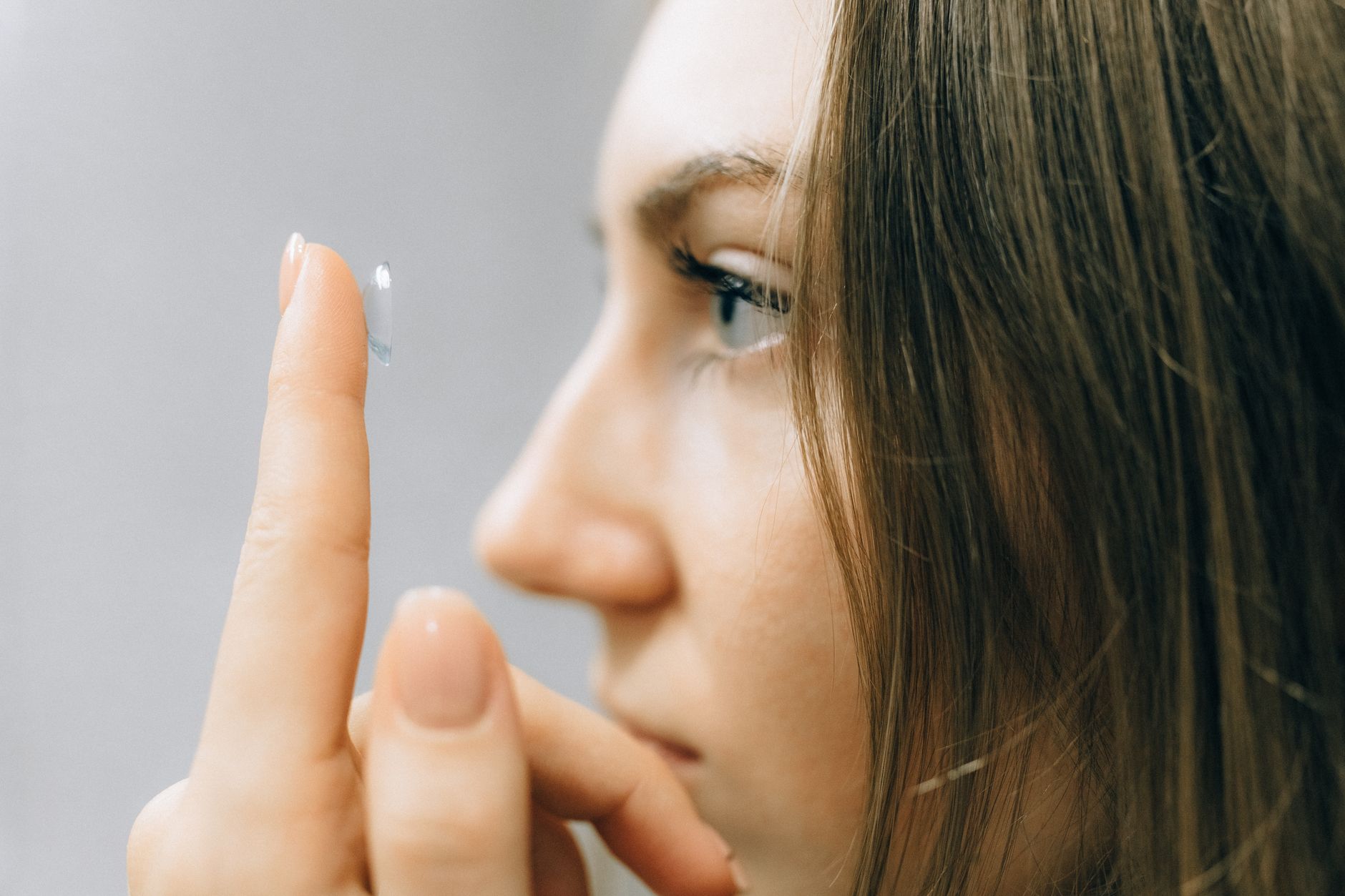
Everything You Need to Know About Colored Contact Safety, Comfort, and Care in 2026
Colored contacts can transform your entire look in seconds, but wearing them safely requires knowing the rules, the risks, and the right care routine. This guide covers everything from FDA regulations and prescription requirements to choosing a flattering color for your skin tone and keeping your lenses comfortable all day.

Colored Contact Shades for Brown Eyes: How to Find a Natural Match
Brown eyes are the most common eye color in the world, which makes finding colored contacts that actually transform them a real challenge. This guide breaks down 12 shades proven to show up beautifully over dark irises, matched by skin tone and aesthetic, so you never waste money on a color that disappears on your eyes.