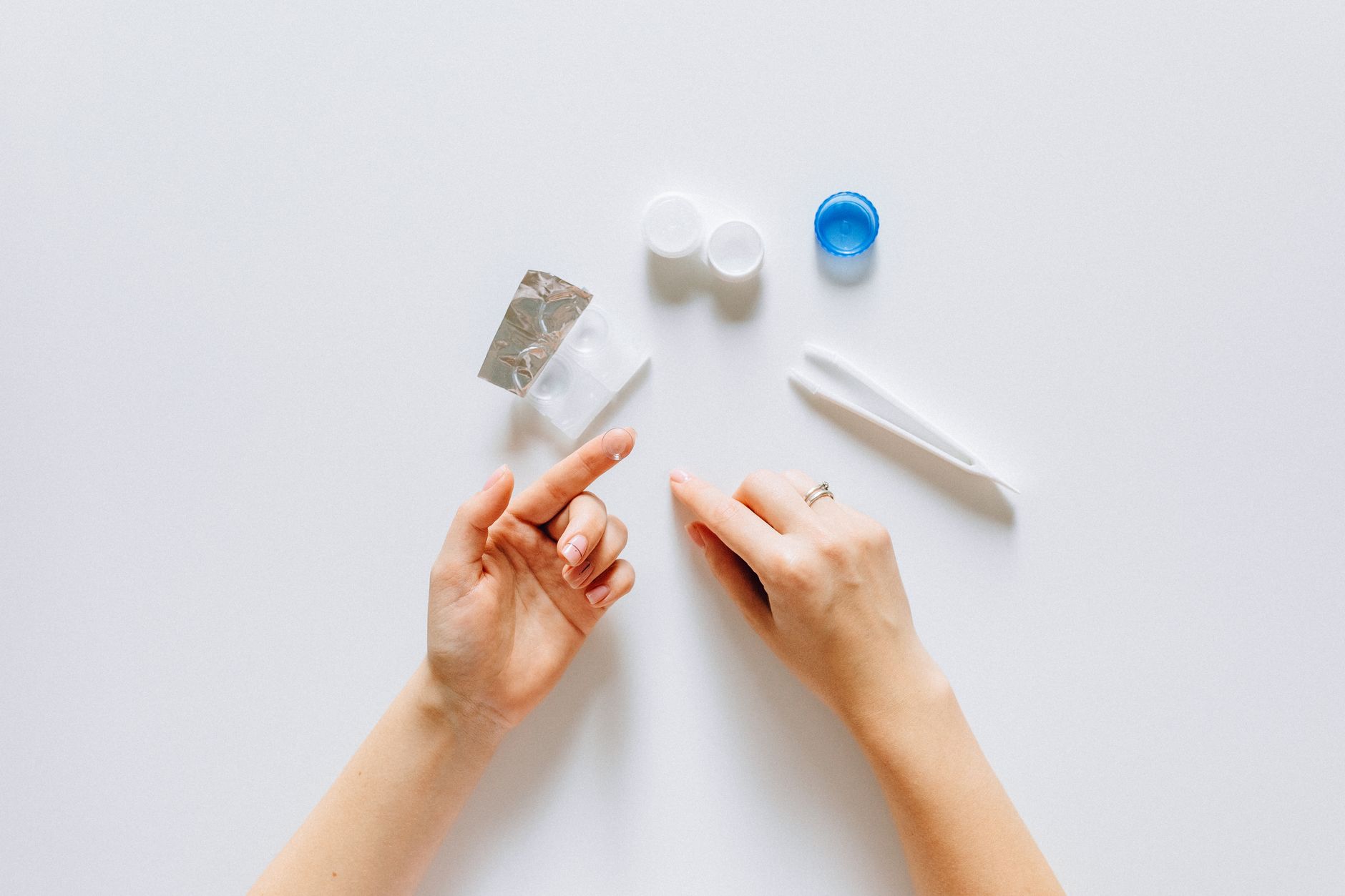
Hapa Kristin vs. Solotica: Which Colored Contact Brand Is Right for You in 2026?
By Hapa Kristin Same-day Colored Contacts9 min read
Hapa Kristin offers trend-driven colors optimized for diverse skin tones, same-day US retail availability, and a beauty-first experience at a more accessible price point.
What Sets Hapa Kristin and Solotica Apart
These two brands occupy the same premium colored contacts space but serve genuinely different buyers. Solotica is a Brazilian brand established in 1955, built around the Hidrocor and Aquarella lines that pioneered the no-limbal-ring formula, a pigment technique that mimics the natural watercolor wash of a real iris. That design philosophy made Solotica the benchmark for natural-looking enhancement, and beauty influencers have trusted it since the mid-2010s for exactly that reason. Hapa Kristin draws from Korean beauty innovation, a sector the global K-beauty market values at USD 21.5 billion by 2036 (futuremarketinsights.com), emphasizing curated color palettes aligned to skin undertones, seasonal drops, and social media trends. The brand positions retail presence and personal color consultation as core pillars, not afterthoughts. Where Solotica built its identity around clinical precision and naturalness, Hapa Kristin built its identity around beauty-forward expression. Both require a valid US prescription, including for zero-power cosmetic lenses, per FDA and Fairness to Contact Lens Consumers Act requirements. That shared requirement is where the similarities largely end.
How Each Brand Built Its Identity
Solotica's no-limbal-ring formula is its signature. Most colored contacts feature a dark outer ring that defines the iris boundary, but Solotica deliberately omits this, producing a softer, diffused color that reviewers consistently describe as a classic enhancement rather than a theatrical transformation (youtube.com). That restraint is intentional and appeals to buyers who want color without detection. Hapa Kristin takes the opposite approach philosophically. The brand is positioned as more fashion-oriented than dramatic, delivering a look that is often softer and trendier, especially for dark brown eyes, rather than a single signature effect (youtube.com). The K-beauty influence shows in the seasonal color release cadence, the warm-toned shade development, and the boutique retail experience designed to feel like shopping for makeup, not visiting a medical supplier.
Color Range and Natural Look: A Detailed Comparison
The global colored contact lens market is projected to grow from $4.2 billion in 2025 to $4.66 billion in 2026 at a CAGR of 10.9% (researchandmarkets.com), and the biggest driver is demand for natural-looking options on dark eyes. With 70-79% of the world's population having brown eyes (contactlensmarketplace.com), both brands compete directly for the same dominant demographic. Solotica's Hidrocor line delivers one of the most convincingly natural color shifts available. The watercolor-wash pigment blends into dark irises rather than sitting on top of them, producing hazel, honey, and gray tones that read as real in natural light. That is the brand's headline advantage, and it is well-earned. Hapa Kristin approaches color range differently. The catalog spans from soft naturals suitable for everyday office wear to bolder fashion colors built for content shoots, giving wearers a genuine rotation rather than one signature shade. The brand explicitly curates shades for medium-to-deep skin tones, a segment historically underserved by European and South American lens brands. Solotica's Mel, Ocre, and Quartzo shades perform well on darker complexions, but those shades were not originally formulated with that audience as the primary focus.
Color Options for Dark Skin Tones
For wearers with deeper skin tones, shade selection is the single most consequential decision. Warm honey, caramel, and hazel tones photograph significantly better on medium-to-deep complexions than cool grays or icy blues, which can create an unnatural contrast. Hapa Kristin's personal color consultation approach helps first-time buyers avoid the wrong shade for their undertone, and the brand's seasonal drops consistently include warm-spectrum options designed with melanin-rich skin in mind. Solotica's palette is beautiful, but the brand's core strength is its natural effect formula, not its breadth of inclusivity-focused shade development. Content creators and beauty influencers with deeper skin tones who want a brand that actively speaks to their complexion will find Hapa Kristin's curation more intentional. That said, Solotica's Hidrocor Mel remains one of the most-cited lenses in deep-skin-tone reviews online, so dismissing it entirely would be inaccurate. The honest answer is that Hapa Kristin is more consistently inclusive by design, and Solotica is more naturally subtle by design.
Pricing, Availability, and Convenience
Convenience is where the two brands diverge most sharply for US buyers. For a spontaneous purchase, that wait is a deal-breaker. Hapa Kristin's same-day in-store availability eliminates that friction entirely. Consider a concrete scenario: a content creator in Los Angeles books a last-minute brand partnership shoot for Saturday. She wants to try a new honey-brown lens to match the warm-toned aesthetic brief. With Solotica, that shoot either happens without colored lenses or gets rescheduled. With Hapa Kristin, she walks in, gets a shade consultation, and walks out wearing her new look the same afternoon. That is not a marketing point. That is a genuine lifestyle advantage that online-only brands cannot replicate. North America accounts for 35% of global colored lens revenue (contactlensmarketplace.com), and the US consumer's expectation for fast beauty access is only increasing. Physical retail also reduces the risk of ordering the wrong shade, since in-person consultation catches undertone mismatches before purchase.
Is Same-Day Availability Worth the Consideration?
For planners who research purchases weeks in advance, Solotica's online model works well. The longer lead time is irrelevant if you already know what you want and when you need it. For the spontaneous beauty consumer aged 18-34 who rotates lens colors the way she rotates lipstick, waiting 7-14 days conflicts directly with how she shops. At Hapa Kristin Same-day Colored Contacts, we see this play out constantly: customers come in hours before events, photoshoots, or nights out and leave with a look they did not have that morning. That shopping behavior is not a niche use case. It is the norm for the beauty-first consumer this brand was built to serve.
Solotica and Hapa Kristin: Eye Health, Comfort, and Safety
Both brands source from reputable manufacturing partners, and buying from an authorized retailer is the most important safety decision any wearer can make. Wearers of non-prescription decorative lenses are 16 times more likely to develop infections (contactlensmarketplace.com), which is why the prescription requirement exists and why purchasing from legitimate channels matters regardless of which brand you choose. Solotica is generally associated with options marketed for dry or sensitive eyes, and the brand's comfortable daily wear reputation is well-documented in the influencer community (youtube.com). Their hydrogel-based lenses are designed with extended wear comfort as a stated priority. Hapa Kristin lenses also use quality hydrogel materials, and regulated disposable lens portfolios have been associated with a 21% decline in customer complaint rates related to discomfort and irritation (strategicmarketresearch.com). Single-use and properly replaced monthly lenses can reduce lens-related inflammatory complications by approximately 33% compared to extended-use modalities (strategicmarketresearch.com). Neither brand has published proprietary clinical comfort trials, so wearer experience remains the primary data source.
Hapa Kristin vs. Solotica: Pros, Cons, and Who Each Brand Suits
Solotica Pros: Industry-leading natural look on dark eyes. The no-limbal-ring Hidrocor formula is genuinely the benchmark for subtlety. Decades of brand trust and a loyal global influencer community. Marketed options for dry and sensitive eyes. Strong for buyers who want a classic enhancement rather than a trendy transformation.
Online-only distribution means multi-day to multi-week wait times in the US. Limited shade development specifically for deeper skin tones as a primary audience. International shipping variability creates uncertainty for time-sensitive purchases.
Hapa Kristin Pros: Same-day US retail access for spontaneous buyers. Trend-driven seasonal drops aligned to K-beauty aesthetics. Explicitly curated shades for diverse and deeper skin tones. Beauty boutique experience, not a medical supplier feel. Accessible pricing that encourages multi-lens rotation. In-store shade consultation reduces first-time buyer mistakes.
Hapa Kristin Cons: Newer brand with less global name recognition than Solotica's seven decades of history. Physical retail available at select US locations, not nationwide.
Comparison Table: Hapa Kristin vs. Solotica at a Glance
A side-by-side breakdown helps you weigh what matters most: Solotica wins on natural subtlety and brand heritage, while Hapa Kristin excels in trend-forward aesthetics, skin-tone inclusivity, and same-day US access. This table summarizes key differences in product philosophy, availability, and target buyer mindset.
The Verdict: Which Brand Should You Choose in 2026?
Neither brand is objectively better. The right choice depends entirely on your priorities. Results speak louder. Here is the honest breakdown.
Choose Solotica if you want the most natural possible color shift on very dark eyes, prioritize decades of brand heritage, and are comfortable planning your purchase 7-14 days in advance. The Hidrocor line remains a legitimate benchmark. If subtle enhancement is your sole criterion, Solotica earns its reputation (youtube.com).
Choose Hapa Kristin if you want same-day US access, a rotating wardrobe of lens colors curated for your skin tone, and a shopping experience that feels like a beauty boutique rather than an online medical catalog. For content creators, trend-responsive shoppers, and anyone building a lens rotation the way they build a makeup collection, Hapa Kristin's model aligns better with modern beauty behavior. The brand delivers a softer, trendier aesthetic for everyday wear that resonates particularly well for dark brown eyes (youtube.com).
The data is clear. With over 45 million contact lens wearers in the US (contactlensmarketplace.com) and a global cosmetic lens market growing at 8.9% annually (strategicmarketresearch.com), the demand for both natural enhancement and fashion-forward color is growing simultaneously. Both brands serve real needs. Know your priority and choose accordingly.
What First-Time Colored Contact Wearers Should Know
A prescription is legally required in the US for all contact lenses, including zero-power cosmetic lenses, under the Fairness to Contact Lens Consumers Act. This is not optional. Get a contact lens fitting from a licensed optometrist, which differs from a standard glasses prescription because it includes base curve and diameter measurements. Start with a natural or enhancement shade rather than a bold fashion color. Build comfort first, then experiment with bolder looks. Never sleep in lenses not specifically approved for extended wear, and replace on schedule. Buying from an authorized retailer, whether Hapa Kristin or Solotica, is the single most important safety decision a new wearer can make. Legitimate sourcing is not a preference. It is protection.
Frequently Asked Questions
Do Hapa Kristin and Solotica lenses require a prescription in the United States?
Yes. Both brands require a valid prescription from a licensed US eye care professional, including for zero-power cosmetic lenses with no vision correction. This is federal law under the Fairness to Contact Lens Consumers Act. Buying any colored contact without a prescription, regardless of brand, is illegal and increases infection risk by 16 times.
Which colored contact brand looks more natural on dark brown eyes?
Solotica's Hidrocor line is the industry benchmark for natural color on dark eyes, using a no-limbal-ring watercolor-wash formula that blends rather than sits on the iris. Hapa Kristin offers warm honey and hazel shades that also look natural and are explicitly curated for deeper skin tones. The best result depends on your specific iris pigmentation and chosen shade.
Can I buy Hapa Kristin colored contacts the same day I want to wear them?
Yes. Hapa Kristin offers same-day in-store availability at select US retail locations, which is a genuine differentiator from online-only brands like Solotica. For spontaneous purchases before events, content shoots, or nights out, you can walk in, get a shade consultation, and leave wearing your new lens color the same afternoon with no shipping wait.
How do Hapa Kristin and Solotica compare in comfort for all-day wear?
Both brands use quality hydrogel lens materials designed for comfortable wear. Solotica is commonly marketed toward dry or sensitive eye wearers. Regulated disposable lens portfolios from both brands are associated with a 21% decline in discomfort complaints. Most wearers report comfortable all-day use when lenses are worn correctly, replaced on schedule, and purchased through authorized retailers.
Are colored contacts safe for first-time wearers, and how do I get started?
Colored contacts are safe when purchased with a valid prescription from a licensed eye care professional and worn as directed. First-time wearers should get a contact lens fitting, not just a glasses prescription, start with a natural shade, never sleep in unapproved lenses, and always buy from authorized retailers. Non-prescription decorative lenses carry a 16 times higher infection risk.
What are the key differences between Hapa Kristin and Solotica lenses?
Solotica uses a no-limbal-ring Hidrocor watercolor formula for maximum naturalness, has 70 years of brand heritage, and sells online only at $60-$90 per pair. Hapa Kristin uses K-beauty-inspired color curation, offers same-day US retail access, explicitly designs shades for diverse skin tones, and positions itself as a beauty brand rather than a medical-adjacent product.
Which brand offers better durability for daily wear?
Both Hapa Kristin and Solotica offer monthly replacement lenses designed for regular daily wear. Neither brand markets extended-wear or continuous-wear lenses. Durability depends heavily on proper care, case hygiene, and on-schedule replacement. Wearing lenses beyond their replacement cycle increases complication risk significantly regardless of brand, so following replacement schedules is the most important durability factor.
How do the prices of Hapa Kristin and Solotica compare?
Solotica monthlies typically retail between $60-$90 per pair through authorized online resellers, with annual replacement lenses running higher. Hapa Kristin is positioned at a mid-premium price point designed to encourage rotation across multiple colors. For shoppers who want to build a multi-lens wardrobe the way they rotate makeup, Hapa Kristin's pricing model is more rotation-friendly by design.
Are there any specific eye conditions that one brand is better suited for?
Solotica markets specific options for dry or sensitive eyes, making it a common recommendation for wearers with mild dryness concerns. Neither brand manufactures toric lenses for astigmatism in their cosmetic colored lines. For any diagnosed eye condition, consult a licensed optometrist before purchasing colored contacts from any brand. Your base curve and diameter measurements also affect comfort significantly.
What do users say about the comfort of Hapa Kristin vs. Solotica?
Community reviews consistently rate both brands as comfortable for all-day wear when used correctly. Solotica wearers frequently highlight moisture retention and a natural feel, particularly for sensitive eyes. Hapa Kristin wearers cite comfortable extended wear and appreciate the in-store fitting experience for getting the right lens parameters. Individual comfort varies based on eye shape, care habits, and replacement schedule adherence.
Sources & References
About the Author
Hapa Kristin Same-day Colored Contacts
Hapa Kristin offers same-day colored contacts designed for every skin tone and style. Their curated collection lets beauty-conscious women change their eye color as easily as their makeup.
Learn more at hapakristin.us →Related Posts
FDA-Cleared Colored Contacts: How to Verify Safety and Which Brands Meet US Standards
Not all colored contacts sold in the US are FDA-cleared, and wearing unregulated lenses can cause serious eye damage. This guide shows you exactly how to verify a lens brand's FDA status, what US law requires even for non-corrective lenses, and which brands consistently meet American safety standards.
12 min read
Daily vs Monthly Colored Contacts: Cost, Comfort, Convenience, and Which Is Right for You
Choosing between daily and monthly colored contacts comes down to more than price. This guide breaks down real cost differences, comfort factors, care routines, and which option fits your lifestyle so you can make a confident, safe choice.
11 min read
Colored Contacts as a Fashion Statement in 2026: Trends, Creators, and Style Inspiration
Colored contacts have crossed over from niche novelty to mainstream beauty staple in 2026, driven by K-beauty aesthetics, short-form video culture, and a new generation of style-conscious wearers who treat eye color like a wardrobe choice. This guide covers the biggest trends, the creators shaping them, and practical advice for finding the right color for your look.
13 min read