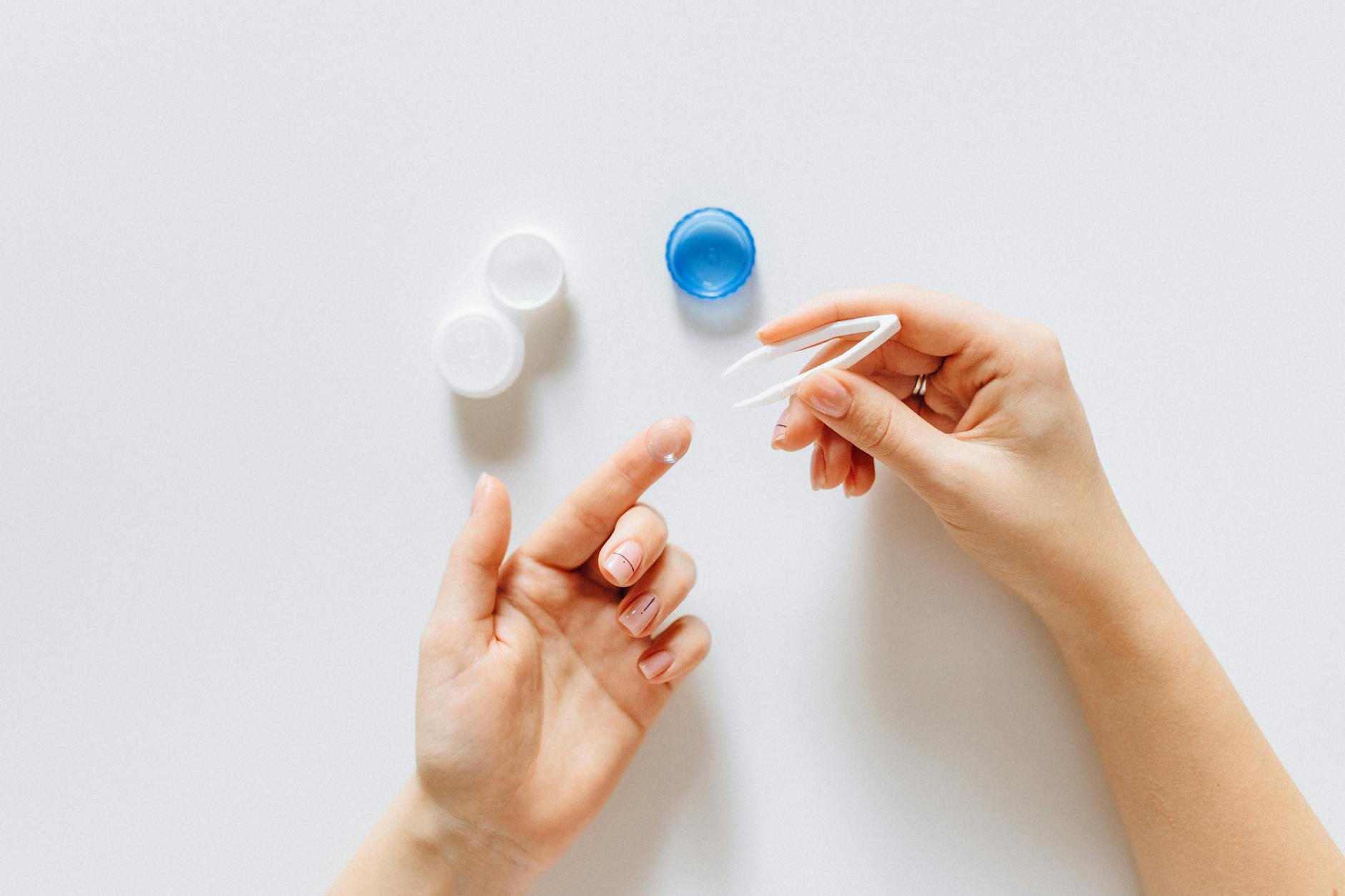
To put in contacts for the first time, wash and dry your hands thoroughly, place the lens on your index fingertip, pull your lower lid down with your middle finger, look up, and gently place the lens on your lower white of the eye. Blink slowly to center it. Most beginners succeed within 5 to 10 minutes.
To put in contacts for the first time, wash and dry your hands thoroughly, place the lens on your index fingertip, pull your lower lid down with your middle finger, look up, and gently place the lens on the lower white of your eye. Blink slowly to center it. Most beginners succeed within 5 to 10 minutes. For example, imagine you are a content creator planning an Instagram Reel for Friday night and want to try a honey-amber lens to match your outfit and lighting. You schedule a quick 30-minute eye exam on Thursday afternoon, get your prescription, and pick up your first pair same-day from a reputable retailer. By Friday morning, after two practice insertions, you are comfortable enough to film, and by evening you have the shot ready to post with a completely transformed eye color that took you less than two minutes to apply.
What You Need Before You Put In Contacts
Before touching a lens, gather everything in one place. You need fresh contact lens solution, a clean lens case, and a lint-free towel. Check the blister pack or case for the expiration date and look for any damage to the seal. A torn or dented package means the sterility is compromised. Toss it. Trim your nails short before your first attempt. Long nails catch on soft lens material and can scratch your cornea. Work at a clean bathroom counter at eye level with good lighting, ideally facing a mirror that lets you see both eyes clearly. Never rinse lenses with tap water or use saliva as a shortcut. Water carries microorganisms that cause serious infections, and 99% of contact lens wearers report at least one hygiene risk behavior (contactlensupdate.com). Starting clean habits from day one protects you for years of wear.
Why a Prescription Matters Even for Cosmetic Lenses
The FDA classifies all contact lenses as medical devices, including decorative colored lenses that do not correct vision. Under the Fairness to Contact Lens Consumers Act, selling contacts without a valid prescription is illegal in the US. The FDA has flagged retailers selling decorative lenses illegally for as little as $20 (fda.gov), but low price does not mean safe. A prescription confirms your lens diameter and base curve match your actual eye measurements. Without that fit, lenses can restrict oxygen flow, cause corneal abrasions, or sit off-center all day. An eye doctor also screens for dry eye or astigmatism that affects which lens material works safely. Reputable brands, including Hapa Kristin, require a valid prescription at checkout for this exact reason. Your eye health is not worth skipping a 30-minute appointment.
How to Put In Contact Lenses: Step-by-Step Instructions
Hand washing is the single most important step. Use soap and water for at least 20 seconds, covering every surface including under your nails and between fingers. Rinse completely so no soap residue remains. Then dry with a lint-free towel. This detail matters. Fluffy cotton towels shed fibers that stick to soft lens material and end up on your eye. A clean microfiber cloth or a paper towel works well. Once hands are dry, remove the lens from its case or blister pack and balance it on the tip of your dominant index finger. The lens should hold its cup shape. Check it at eye level: a correct lens looks like a smooth bowl. If the edges flare outward like a taco shell or soup plate, it is inside out. Flip it gently. Some lenses carry a 1-2-3 laser marking that reads correctly only when the lens is right-side out.
Before placing the lens, inspect it carefully. Look for tears along the edge, cloudy deposits, or dirt. A torn lens goes in the trash. A dirty lens gets rinsed with fresh solution, not water. Never try to fix a torn lens by trimming it. Place the lens back on your dry fingertip and approach the mirror. Use your non-dominant hand's middle finger to pull your lower eyelid down, and use another finger to hold your upper lid open against your brow bone. Look slightly upward or straight ahead. Bring the lens slowly toward the lower white part of your eye (the sclera, not the iris). Hesitation triggers your blink reflex, so commit to a steady, calm approach.
Placing the Lens and Settling It In
Gently rest the lens on the lower sclera. Do not press it in. Pressure squeezes out the tear film that helps the lens center naturally. Just let it rest there, then slowly release your eyelids and close your eye gently. The lens will float into position. Open your eye and look up, down, left, and right in sequence. These directional eye movements help the lens settle over your iris and push out any air bubbles trapped underneath. Blink a few more times until your vision clears. If you see a blur at the edge of your field of vision, the lens has drifted slightly. Look toward the blur, then blink. This repositions it without using your fingers. Mild awareness of the lens is normal in the first few minutes. Pain is not normal. At Hapa Kristin Same-day Colored Contacts, we recommend removing the lens immediately if you experience any discomfort, as this signals a fit or hygiene issue that needs attention. A sharp or burning sensation means the lens may be inside out, damaged, or contaminated. Remove it immediately and start over with a fresh lens.
What to Do If the Lens Keeps Folding or Sliding Off Your Finger
Too much solution on the lens makes it collapse and slide. Shake off excess solution so the lens is moist but not dripping. Make sure your fingertip is dry before balancing the lens on it. Some beginners find it easier to rest the lens across two fingertips instead of just one tip, which gives the lens a broader, more stable platform. Practice holding your eyelids open separately before attempting a full insertion. Stand at the mirror and hold your lids apart for 10 seconds without blinking. This trains the reflex. Slow your approach speed. Moving toward your eye quickly triggers a protective blink every time. A steady, deliberate pace gives your nervous system a chance to accept the contact rather than reject it.
How to Take Out Contact Lenses Safely
Removing lenses gets less attention than insertion, but it is just as critical. Wash and dry your hands first, same as for insertion. Look upward and use your index finger to slide the lens down from the center of your eye to the lower white. Never drag a lens directly off your cornea from the center position. The cornea is your eye's most sensitive surface. Once the lens is on the lower sclera, gently pinch it between the pad of your index finger and thumb and lift it away. Keep nails short or use only the soft fingertip pad to avoid corneal scratches. If the lens feels stuck or dry, apply one or two drops of preservative-free rewetting drops and blink gently before trying again. Forcing a dry lens off causes micro-abrasions that invite infection.
Always remove lenses before sleeping unless your eye doctor has specifically prescribed extended-wear lenses. Across the US, 50% of contact lens wearers report sleeping in their lenses (contactlensupdate.com), which significantly increases infection risk by reducing oxygen reaching the cornea overnight. Place removed lenses into a clean case filled with fresh solution. Never top off old solution with new. Dump, rinse, and refill. Discard daily disposable lenses after one use. Re-wearing a daily lens introduces bacteria concentrated from the previous wear session. If you cannot locate a lens in your eye, do not attempt removal without consulting an eye care professional first.
Contact Lens Care Habits Every First-Timer Should Build
Compliance with contact lens hygiene recommendations ranges from 40% to 91% noncompliance across wearers (reviewofcontactlenses.com), which means the majority of wearers take at least one shortcut that puts their eyes at risk. Build strong habits from the start. Use only fresh multipurpose or hydrogen peroxide-based solution. Hydrogen peroxide systems require a neutralizing case and a full six-hour soak cycle. Do not skip the soak time. Rub your lenses gently in your palm with a few drops of solution before soaking, even if the bottle says "no-rub." The mechanical action removes deposits more effectively than soaking alone. Replace your lens case every one to three months. Biofilm builds on the inner surfaces of cases regardless of how often you clean them.
Never wear contacts while swimming, showering, or using a hot tub. Fresh and salt water both carry Acanthamoeba, an organism that causes Acanthamoeba keratitis, a corneal infection that is extremely difficult to treat and can cause permanent vision damage. The cosmetic colored lens category is growing fast, with the global market estimated at USD 1.5 billion in 2025 and projected to reach USD 2.9 billion by 2035 at a CAGR of 7.1% (gminsights.com), which means more first-time wearers need this information every year. Schedule an annual eye exam even after your first prescription is active. Your eyes change, and so does the fit you need.
How Long Can You Wear Colored Contacts in One Day?
Most cosmetic colored lenses are approved for 8 to 12 hours of daily wear, but first-time wearers should start with 4 to 6 hours and add one to two hours per day over the first one to two weeks. This gradual build gives your corneas time to adjust to reduced oxygen permeability. Colored lenses have a tinted printing layer that slightly restricts oxygen flow compared to clear lenses. Wear time discipline matters more with colored contacts than with standard clear lenses. Watch for redness, dryness, blurred vision, or a gritty sensation. Any of these signals means remove the lenses immediately, give your eyes a break, and use rewetting drops. At Hapa Kristin, we hear from new wearers frequently who push to 12 hours on day one and wonder why their eyes feel irritated. Our team has found that respecting the gradual adjustment timeline is the difference between comfortable all-day wear and abandoning contacts altogether. The adjustment timeline is real. Respect it and you will be wearing comfortably all day within two weeks.
Choosing Your First Pair of Colored Contacts as a Beginner
The global cosmetic contact lens market holds North America at 36.9% of global market share (gminsights.com), which reflects just how many people in the US are already rotating colored lenses the way they rotate lipstick shades. Choosing your first pair comes down to two factors: skin undertone and natural eye color. Warm undertones (golden, peachy, or olive complexions) pair best with honey, hazel, warm brown, and amber lenses. Cool undertones (pink or bluish undertones) complement grey, violet, blue, and cool hazel shades well. Start with a color close to your natural eye color for the most flattering, believable result.
Dark brown eyes need lenses with a dense, opaque pigment layer to actually show the color change. Translucent or enhancement lenses will not alter a dark base color visibly. Look for multi-tonal printing patterns that layer color the way makeup layers pigment, rather than a flat opaque disc that looks artificial. Hazel, warm honey, and chestnut tones blend most naturally with dark irises. Grey and blue create a striking contrast that photographs dramatically, which makes them popular for content creation. Prioritize lenses with a high oxygen permeability (Dk/t value) for all-day comfort as a new wearer. Ask your eye doctor for a trial lens before committing to a full box. We recommend this step especially with colored lenses, since the visual impact and comfort can vary significantly between brands and designs. A trial confirms both comfort and fit before you invest in a full supply.
| Feature | Enhancement Lenses | Opaque Colored Lenses |
|---|---|---|
| Best for | Light eyes (blue, hazel, grey) | Dark eyes (brown, black) |
| Color change effect | Subtle, enhances natural color | Full color transformation |
| Opacity | Translucent tinted layer | Dense pigment layer |
| Natural look at close range | Very natural | Depends on pattern quality |
| Oxygen impact | Minimal | Slightly more restriction |
| Best use case | Everyday wear, office | Events, content shoots, bold looks |
Hapa Kristin designs account for dark eye pigmentation by using multi-tonal printing that layers color depth, rather than a single flat opaque ring. The same-day availability means a beginner in the US can pick up a first pair without waiting days for shipping, which matters when you want to test a new color before a shoot or event. Consider starting with the best colored contacts for beginners in a natural shade, then building your collection as your comfort with insertion and removal grows.
Frequently Asked Questions
Is it safe to put in contact lenses for the first time without help from a doctor?
How long does it take to get used to wearing contacts?
What happens if I accidentally put a contact lens in inside out?
Can I wear colored contacts if I have never worn lenses before?
Why does my eye keep blinking when I try to put in a contact lens?
Can I sleep in my colored contact lenses?
How do I know if my contact lens is actually in my eye or folded behind my lid?
Do I need a prescription to buy colored contacts in the US even if they do not correct my vision?
What are some common mistakes beginners make when putting in contacts?
How can I tell if my contact lens is inside out?
Are there any specific techniques to make inserting contacts easier?
How long should I practice inserting contacts before feeling comfortable?
What should I do if my contact lens falls out immediately after insertion?
Sources & References
About the Author
Hapa Kristin Same-day Colored Contacts
Hapa Kristin offers same-day colored contacts designed for every skin tone and style. Their curated collection lets beauty-conscious women change their eye color as easily as their makeup.
Learn more at hapakristin.us → (opens in a new tab)Related Posts

8 Best Colored Contacts for Warm Skin Tones (Ranked by a Beauty Brand)
Warm skin tones glow with honey, hazel, amber, and earthy green lenses — but the wrong color can wash you out instantly. This ranked list breaks down the eight best colored contact options for golden, olive, and bronze complexions, with same-day picks from Hapa Kristin so you can shop and wear today.
15 min read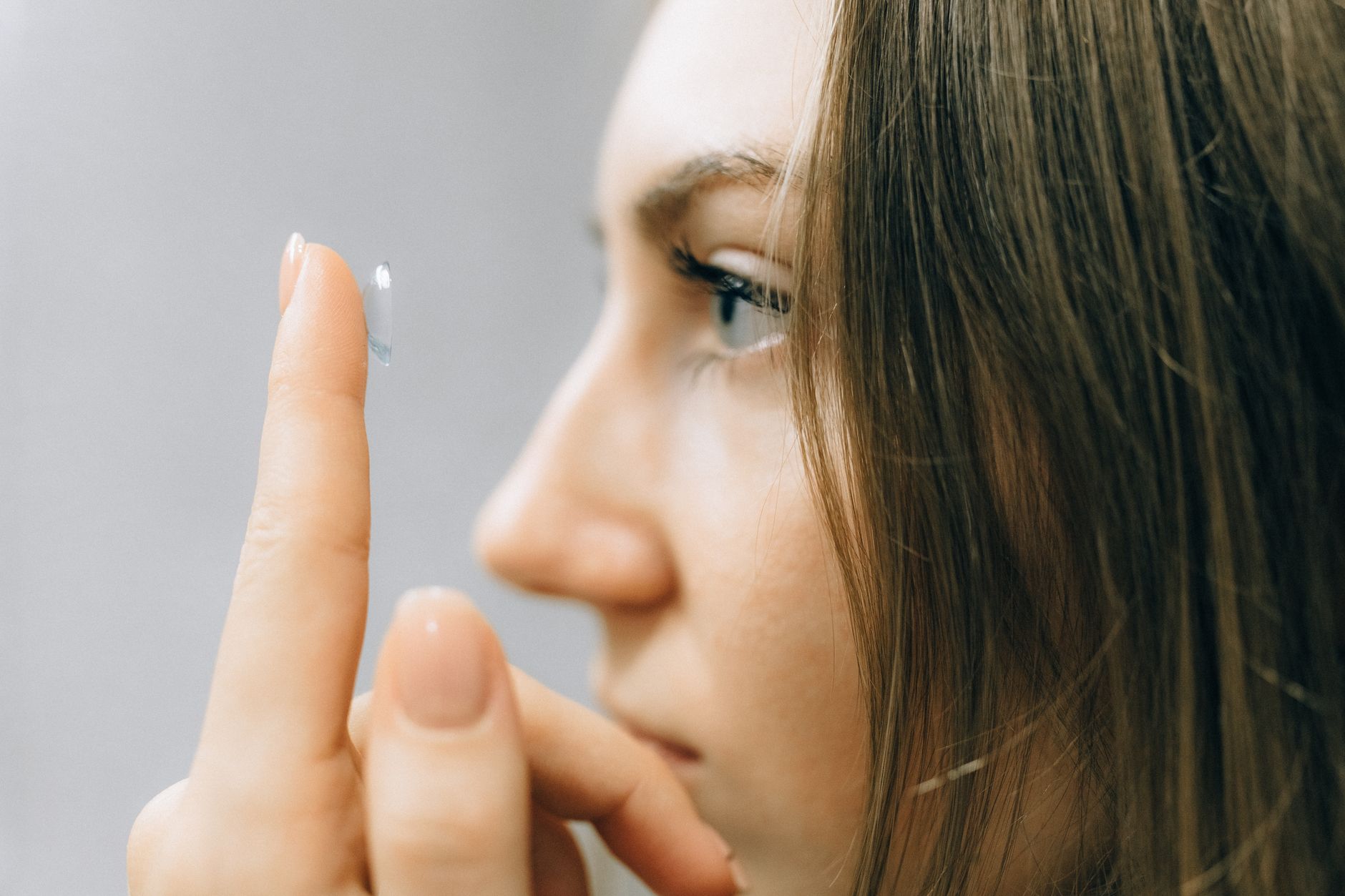
Everything You Need to Know About Colored Contact Safety, Comfort, and Care in 2026
Colored contacts can transform your entire look in seconds, but wearing them safely requires knowing the rules, the risks, and the right care routine. This guide covers everything from FDA regulations and prescription requirements to choosing a flattering color for your skin tone and keeping your lenses comfortable all day.
16 min read
Colored Contact Shades for Brown Eyes: How to Find a Natural Match
Brown eyes are the most common eye color in the world, which makes finding colored contacts that actually transform them a real challenge. This guide breaks down 12 shades proven to show up beautifully over dark irises, matched by skin tone and aesthetic, so you never waste money on a color that disappears on your eyes.
11 min read