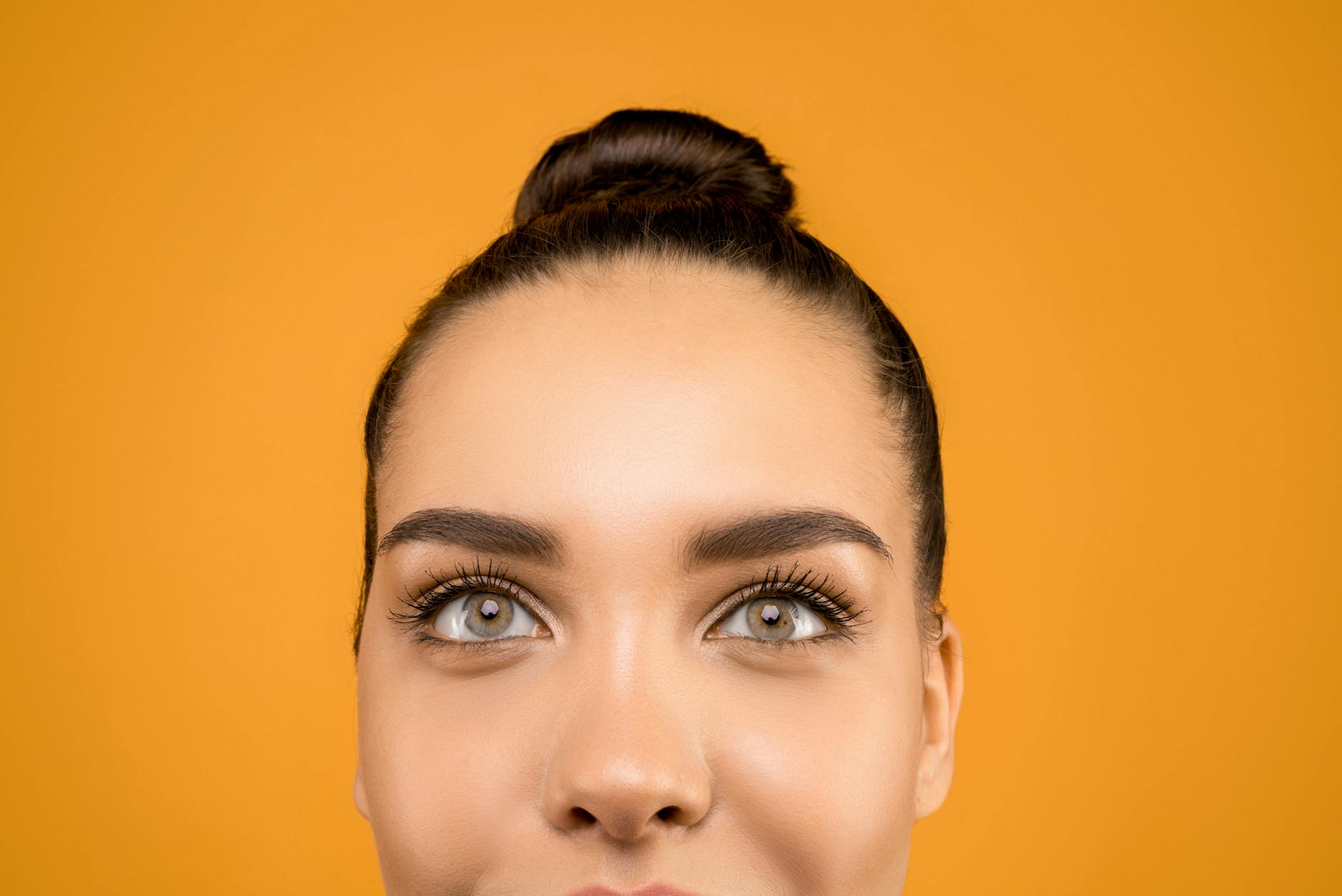
The seven most scroll-stopping colored contact looks for content shoots are: glazed honey brown for golden-hour reels, icy grey for editorial close-ups, ocean blue for coastal aesthetics, deep green for dark academia, violet for K-beauty editorial, warm hazel for everyday glam, and limbal-ring-enhanced black for dramatic intensity. Each pairs a specific lens color with a proven content aesthetic.
Colored contacts are not just a beauty accessory. They are a content strategy. When your eyes are the first thing a viewer's attention lands on in a close-up frame, the color, depth, and definition of your iris determines whether someone stops scrolling or keeps moving. The global colored contact lens market hit $4.2 billion in 2025 (thebusinessresearchcompany.com), growing at a 10.4% CAGR. That growth is not driven by vision correction. It is driven by creators who understand that eyes are the focal point of every close-up shot, every beauty tutorial thumbnail, and every editorial still. At Hapa Kristin Same-day Colored Contacts, we built our entire curation around that insight: the right lens color does not just change your eye color, it changes the entire read of your content.
Why Eye Color Is the Most Scroll-Stopping Element in Close-Up Content
Eye-tracking research consistently shows that human viewers fixate on the eyes first when viewing a face, whether in a photo or video. This is not aesthetic preference. It is hard-wired biology. For content creators, that means your eye color is doing more visual work than your contour, your outfit, or your background. A high-contrast, dimensional lens color in a close-up frame creates a micro-moment of surprise that interrupts the passive scroll. That pause is everything on platforms like TikTok and Instagram Reels, where the algorithm rewards watch time and saves. Cosmetic applications dominate the colored lens market with a 48% share (marketresearchfuture.com), and a significant portion of that demand is creator-driven. The scroll-stopping mechanism is real, and the lens color you choose is the trigger. Choose it deliberately.
How Color Reads Differently on Camera Versus in the Mirror
This is one of the most underexplored topics in colored contact content, and it matters. What you see in the mirror is not what your camera captures. Camera sensors process color differently from human vision, and platform compression algorithms can flatten or shift hues depending on the codec. Warm tones like honey brown and hazel tend to read warmer and more saturated on camera than in person, which is why they photograph so beautifully in golden-hour light. Cool tones like icy grey and violet can shift toward blue or appear more muted under warm studio lighting unless you balance with a complementary light source. Deep green lenses, which may look rich and forest-dark in a mirror, can pull olive or khaki under bright white ring light. Test your lens color under your actual filming conditions before shoot day. What looks stunning in your bathroom will look completely different under a diffused softbox or direct afternoon sun.
1. Glazed Honey Brown: The Golden-Hour Reel Look
Warm amber-brown lenses are the single most universally flattering colored contact choice for video content. The reason is physics. Honey brown lenses catch warm, raking light and scatter it across the iris in a way that mimics the luminous effect of natural eyes photographed in late afternoon sun. The result reads on camera as effortlessly glowing rather than artificially altered. This is the lens that makes viewers comment "what are those contacts" rather than "are those contacts." Honey brown works beautifully on medium and deep skin tones, where it adds warmth and cohesion rather than jarring contrast. For example, consider a beauty creator in Los Angeles with deep skin and warm undertones who films golden-hour content on the beach. When she wears honey brown lenses paired with bronzed makeup and loose waves, the warm amber tones catch the late afternoon sun and scatter across her iris, creating that effortlessly glowing effect that reads as natural on camera rather than artificially altered. On fair skin, it creates a striking sun-kissed effect that holds up in 4K. Pair honey brown with bronzed makeup, a peachy lip gloss, and loose waves for a visual package that is built for saves and shares. This is the safest first purchase for any creator who wants real impact without venturing into obviously editorial territory. Among first-time cosmetic contact buyers, warm brown tones are consistently the top-requested color, and for good reason. They deliver scroll-stopping results without requiring a full makeup overhaul to make them work.
Which skin tones does honey brown work best on?
Honey brown reads most naturally on medium to deep skin tones, where it complements warm undertones and creates a cohesive, sun-warmed look. On fair skin, the contrast is intentional and beautiful, especially in golden-hour outdoor shooting conditions. Creators with olive complexions consistently report honey brown as their highest-performing lens color for saves and shares because the warmth unifies the entire look rather than competing with it.
2. Icy Grey: The Editorial Close-Up Look
Grey is one of the rarest natural eye colors. Only about 3% of the world's population has grey eyes (worldpopulationreview.com). That rarity is precisely what makes icy grey lenses so arresting in a content frame. Close-up shots benefit enormously from high-impact lens colors, and grey delivers that impact without reading as costume or theatrical. The key is a strong limbal ring definition, which gives eyes a wide, striking appearance that holds in 4K video. Grey lenses read as high-fashion and intentional because they reference a real but extremely rare natural eye color. The effect is aspirational, not fantastical. Style icy grey with monochrome or muted-tone outfits so the eyes command the frame completely. This is the go-to editorial lens for creators shooting fashion lookbooks, beauty brand collaborations, or any content where you want the eyes to carry the whole composition. On deeper skin tones, the contrast between cool grey irises and rich melanin creates maximum visual drama. Balance the cool tone with a bold brow, defined contour, or a warm nude lip. A graphic liner in charcoal or warm brown keeps the look grounded rather than washed out.
How do you style icy grey lenses without looking washed out?
Balance cool-toned grey lenses with a bold brow, defined contour, or a warm lip to anchor the face. Avoid pairing pale, cool-toned foundations with grey lenses because the combination flattens the face on camera. A graphic liner or smoked-out liner in charcoal or warm brown keeps the editorial look grounded and ensures the grey lenses read as a deliberate style choice.
3. Ocean Blue: The Coastal and Travel Aesthetic Look
Blue is one of the top-searched cosmetic lens colors globally, and ocean blue specifically is the version built for lifestyle and travel content. Only about 8%-10% of people naturally have blue eyes (worldpopulationreview.com), which means blue contacts create genuine visual surprise for the majority of viewers. The crucial distinction is lens construction. A medium blue with brown or grey blending around the pupil looks dimensional and real. A flat, single-tone electric blue looks costume. For content creators who want the coastal aesthetic payoff without the theatrical read, opt for a blue-grey hybrid, a stormy blue, or a steel blue with a dark limbal ring. These photograph convincingly in outdoor settings, including beaches, rooftops, and botanical gardens, where natural light amplifies the blue tone without bleaching it. Pair with nautical, boho, or resort-style wardrobes for a visually unified grid that reads as intentional and aspirational.
Will blue contacts look natural on dark brown eyes?
Blue lenses with a dark limbal ring and a gradient blend toward the pupil look far more natural on dark irises than flat single-tone blue options. Brands offering 3-tone or multi-layer blue lenses designed for dark irises produce the most convincing results. For dark eyes, a blue-grey hybrid like stormy or steel blue photographs more naturally than bright or electric blue and holds up better in close-up 4K frames.
4. Deep Forest Green: The Dark Academia and Moody Aesthetic Look
Green is the rarest natural eye color on the planet. Only about 2% of the world's population has green eyes (worldpopulationreview.com). That extreme scarcity makes green lenses inherently comment-generating. Viewers stop to register something their brain files as unusual. Different green shades work for different content types. Olive green is ideal for lifestyle and cottage-core content, where it reads as warm and earthy. Forest green works for dark academia aesthetics, moody editorial, and autumn content, where it photographs as rich and jewel-toned. Bright emerald pushes into fantasy or high-fashion editorial territory and requires intentional styling to avoid a theatrical read. Rich green lenses in forest or olive shades create an otherworldly, moody effect that pairs with warm earth tones, burgundy, and deep plum makeup for cohesive moodboard-worthy content. Creators using green lenses in shadowy, warm lighting setups report high save rates because the combination produces images that feel cinematic rather than snapshots. Deep green is underused by most creators, which means it still carries real novelty value that drives comments and shares in 2025.
How does forest green look on light versus dark skin tones?
On fair to medium skin, forest green creates a romantic, vintage editorial contrast reminiscent of Pre-Raphaelite portraiture. On deeper skin tones, forest green reads as rich and regal rather than subtle, making it ideal for bold statement-driven content. Lighting matters significantly: warm, dim lighting deepens green lenses while bright white light can make them appear more olive or hazel.
5. Soft Violet: The K-Beauty Editorial Look
Violet and lavender lenses are a signature of K-beauty lens culture, and they have crossed decisively into mainstream Western beauty content. The global cosmetic contact lens market is valued at USD 1.65 billion in 2024 and projected to reach USD 2.75 billion by 2030, growing at a CAGR of 8.9% (strategicmarketresearch.com). A significant driver of that growth is the K-beauty aesthetic crossing into U.S. creator communities. Muted violet, specifically the dusty lavender or grey-violet range rather than bright purple, reads as elevated and editorial rather than costume. This is the Y2K revival look and the K-beauty fluency signal in one lens. It works best with glass-skin or dewy foundation finishes and your-lips-but-better lip colors that keep the eyes as the clear focal point. Soft pink, lilac, or nude eyeshadow blended into the crease enhances the violet tone without overwhelming it. A glossy sheer lip or a soft mauve keeps the palette harmonious and prevents the look from reading as theatrical on camera. Violet lenses are the fastest way to signal K-beauty aesthetic fluency to an audience that already speaks that visual language.
What makeup pairs best with violet contact lenses?
Stick to a clean, dewy base so the lenses read as a deliberate beauty choice rather than one element competing with heavy makeup. Soft pink, lilac, or nude eyeshadow blended into the crease enhances the violet tone without overwhelming it. A glossy, sheer lip or soft mauve keeps the palette harmonious and prevents the full look from reading as costume or theatrical in close-up shots.
6. Warm Hazel: The Everyday Glam and GRWM Look
Hazel is the great chameleon of cosmetic contacts. Only about 5% of the world's population naturally has hazel eyes (worldpopulationreview.com), but hazel lenses blend brown, green, and gold in a way that mimics natural iris variation so convincingly that viewers often cannot identify them as lenses at all. This is the everyday glam workhorse. Hazel is the number one requested lens color from first-time colored contact buyers who want something different but not dramatic. For a creator who shoots daily or weekly content, hazel lenses provide something no single-tone color can: genuine variability across a content series. The lens color shifts depending on outfit color, ambient lighting, and camera white balance. Warm lighting emphasizes golden and amber notes. Cool or natural daylight brings forward the green tones. A single pair of natural-look colored contacts in hazel will look meaningfully different across your outdoor shoot, your studio setup, and your golden-hour reel, giving your grid natural visual variety without requiring you to switch lenses. Pair hazel with soft glam, warm neutrals, or date-night makeup for GRWM content that feels authentic and aspirational simultaneously.
Why do hazel lenses photograph differently than they appear in the mirror?
Camera sensors capture multi-tone lenses differently from human vision, often pulling out the green or gold flecks more prominently in photos. Warm lighting emphasizes the golden and amber notes in hazel lenses while cool or natural daylight brings forward the green tones. This natural variability is a content advantage because a single pair of hazel lenses will look different across shooting locations and lighting setups.
7. High-Definition Black: The Dramatic Intensity Look
Enlarged black lenses with an amplified limbal ring are the ultimate tool for creators who want to completely transform their eye shape and intensity without using a wild color. The limbal ring enlargement effect makes eyes appear wider, more luminous, and more awake on camera, even without heavy eye makeup. This is the circle lens aesthetic at its most powerful: the K-beauty and anime-influenced look that has driven significant crossover into U.S. creator communities. Black or dark-brown enlargement lenses are a staple in Korean beauty content, and their influence is now firmly embedded in U.S. Gen Z beauty culture. The effect is not about color drama. It is about proportion and contrast. A dramatically enlarged, defined iris against the white of the eye creates a hyper-present, high-definition gaze that holds up in every type of content frame from 60-second reels to long-form YouTube thumbnails. Pair with bold graphic liner, striking blush placement, and minimalist skin for a fashion-forward editorial result. These lenses are classified as cosmetic contact lenses and, like all contact lenses in the U.S., require a valid prescription from an eye doctor regardless of whether they correct vision (fda.gov). Purchase only from licensed U.S. retailers.
Are black circle lenses safe for all-day content shoots?
FDA-cleared cosmetic contact lenses, including dark enlargement lenses, are safe for all-day wear when purchased from a licensed U.S. retailer and used with a valid prescription. The key comfort factors are lens material oxygen permeability and water content, not the color or tint itself. Silicone hydrogel lenses led the market with a 52% share due to superior comfort and oxygen permeability (marketresearchfuture.com), making them an excellent choice for long shoot days.
How to Choose the Right Colored Contact Look for Your Skin Tone and Content Aesthetic
Choosing a colored contact lens is not just about picking a color you like in isolation. It is about matching lens color to your skin tone, your content aesthetic, and your filming conditions simultaneously. Here is a practical framework. Warm skin tones, whether fair, medium, or deep, tend to be complemented by warm lens colors: honey brown, hazel, amber, and warm olive green. These colors do not fight your undertone. They deepen and unify the look. Cool skin tones photograph well with cool lens colors: icy grey, steel blue, violet, and forest green. The contrast is intentional and editorial rather than jarring. For dramatic, high-contrast looks regardless of skin tone, dark enlargement lenses with a strong limbal ring add intensity without introducing a color variable. Consider your content aesthetic as equally important as your skin tone. A coastal travel grid is served by ocean blue. A dark academia channel is served by forest green. A K-beauty-influenced beauty channel is served by soft violet or hazel. Your best colored contacts for content shoots are the ones that belong to the world your content lives in.
| Lens Color | Best Skin Tone | Content Aesthetic | Filming Condition |
|---|---|---|---|
| Glazed Honey Brown | Medium, deep, olive | Golden-hour reels, lifestyle | Natural warm light |
| Icy Grey | All, especially deep | Editorial, fashion, lookbook | Studio, controlled light |
| Ocean Blue | All, especially medium-fair | Coastal, travel, boho | Outdoor, natural light |
| Deep Forest Green | All | Dark academia, moody, autumn | Warm dim or candlelit |
| Soft Violet | Fair, medium | K-beauty, Y2K, fantasy | Studio, ring light |
| Warm Hazel | All | GRWM, everyday glam, date-night | Any lighting |
| HD Black Limbal Ring | All | Anime, K-beauty, high-fashion | Any, great in close-up |
Frequently Asked Questions
Do I need a prescription to buy colored contacts in the United States, even if I have perfect vision?
How do I choose the right colored contact lens color for my skin tone?
Are colored contacts safe to wear during a long content shoot or all-day event?
What is the difference between natural-look and dramatic colored contact lenses?
Can I get colored contacts the same day without ordering online and waiting for shipping?
How do I keep my colored contacts comfortable during a full day of filming?
What are the most popular colored contact lens shades for content shoots?
Are there any safety tips for wearing colored contact lenses during shoots?
Can I wear colored contact lenses if I have sensitive eyes?
What are the best brands for high-quality colored contact lenses?
Sources & References
- Eye Color Percentage by Country 2026 (opens in a new tab)[org]
- FDA — Contact Lenses (opens in a new tab)[gov]
- Cosmetic Contact Lenses Market Report (2026): Must-Know Insights & Updates (opens in a new tab)[industry]
- Coloured Contact Lenses Market Size, Share, Trends, 2035 (opens in a new tab)[industry]
- Coloured Contact Lenses Market Growth Analysis Report 2026 (opens in a new tab)[industry]
About the Author
Hapa Kristin Same-day Colored Contacts
Hapa Kristin offers same-day colored contacts designed for every skin tone and style. Their curated collection lets beauty-conscious women change their eye color as easily as their makeup.
Learn more at hapakristin.us → (opens in a new tab)Related Posts

8 Best Colored Contacts for Warm Skin Tones (Ranked by a Beauty Brand)
Warm skin tones glow with honey, hazel, amber, and earthy green lenses — but the wrong color can wash you out instantly. This ranked list breaks down the eight best colored contact options for golden, olive, and bronze complexions, with same-day picks from Hapa Kristin so you can shop and wear today.
15 min read
Everything You Need to Know About Colored Contact Safety, Comfort, and Care in 2026
Colored contacts can transform your entire look in seconds, but wearing them safely requires knowing the rules, the risks, and the right care routine. This guide covers everything from FDA regulations and prescription requirements to choosing a flattering color for your skin tone and keeping your lenses comfortable all day.
16 min read
Colored Contact Shades for Brown Eyes: How to Find a Natural Match
Brown eyes are the most common eye color in the world, which makes finding colored contacts that actually transform them a real challenge. This guide breaks down 12 shades proven to show up beautifully over dark irises, matched by skin tone and aesthetic, so you never waste money on a color that disappears on your eyes.
11 min read