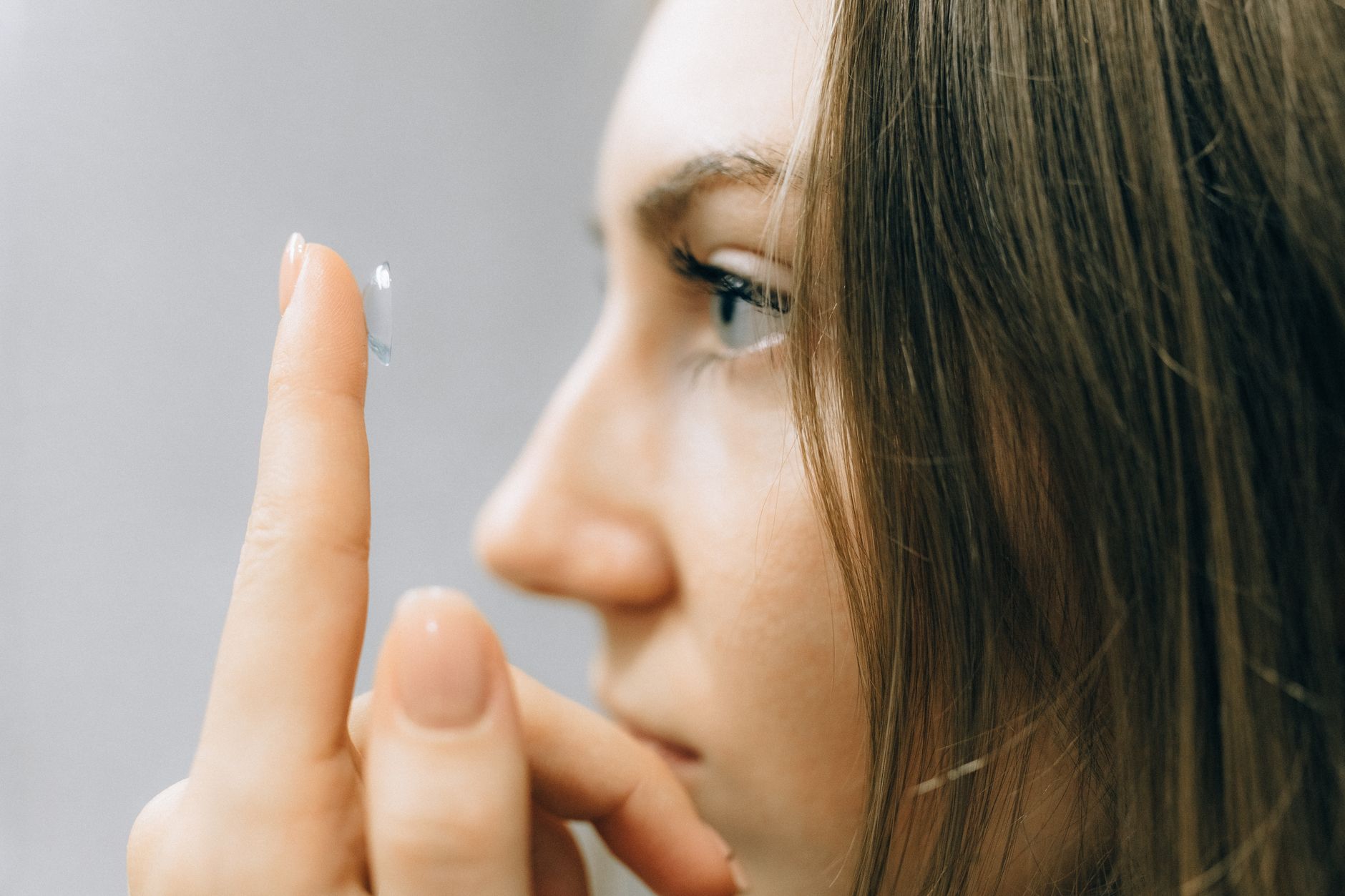
To wear colored contacts safely for the first time, wash your hands thoroughly, place the lens on your fingertip, pull down your lower eyelid, and gently set the lens on your eye. Start with 4 to 6 hours of wear, always use contact solution, and never sleep in them. A valid eye prescription is required in the US, even for non-corrective lenses.
Do You Actually Need a Prescription for Colored Contacts?
Yes, every single time. In the US, all contact lenses, including purely cosmetic, non-corrective colored contacts, are classified as medical devices by the FDA and legally require a valid prescription before purchase. This applies whether you have perfect 20/20 vision or wear glasses. Approximately 45 million Americans wear contact lenses (360iresearch.com), and every single one of them, regardless of whether they wear prescription or cosmetic lenses, is required by federal law to have a valid fitting on file. Buying colored contacts without a prescription is not just a technicality. It is genuinely dangerous. An ill-fitting lens can cause corneal abrasions, bacterial infections, and in severe cases, permanent vision damage. Reputable US-based retailers like Hapa Kristin Same-day Colored Contacts require a valid prescription at checkout. That is a safety feature, not a barrier. Your prescription is typically valid for one year, so keep it handy for quick reorders.
Colored contacts are medical devices, which means a proper fitting and contact lens prescription check matter even when the lenses are purely cosmetic. At Hapa Kristin Same-day Colored Contacts, we emphasize that every customer must provide a valid prescription before purchase, because we prioritize your eye health above all else. A contact lens exam is different from a standard eye exam. Your eye doctor measures your eye's base curve and diameter to ensure the lens sits correctly on your cornea. A lens that is too tight restricts oxygen and can cause corneal hypoxia. A lens that is too loose moves around and blurs your vision. Neither is comfortable, and neither is safe for daily wear. Getting a proper contact lens fitting before you buy is not optional, and eye care practitioners are seeing increased demand for these fittings, with 54% of practitioners expecting their contact lens practices to grow in 2026 (clspectrum.com).
How to Get a Contact Lens Prescription Fast
Getting your prescription does not have to take weeks. Call your optometrist or ophthalmologist and specifically request a contact lens fitting, not just a standard eye exam. Many clinics offer same-day or next-day appointments, especially when you mention you want cosmetic lenses. Bring any existing glasses prescription, but understand that a glasses prescription does not automatically translate to a contact lens prescription. The measurements are different. Some states now offer telehealth optometry services, but an in-person fitting is strongly recommended for first-time wearers. Once you have your prescription, online ordering becomes straightforward. According to federal contact lens rule data, 82% of prescription copy responses from practitioners arrive within 48 hours of a request (federalregister.gov), so turnaround is typically fast.
How to Insert Colored Contacts for the First Time Without Panic
Insertion anxiety is real, but it is temporary. Most new wearers find that within a few practice sessions, the process feels completely natural. The key is technique over speed. Always wash and dry your hands for at least 20 seconds before touching lenses. Soap residue and bacteria are leading causes of contact-related eye infections, so skipping this step is never worth it. Before you place the lens on your finger, inspect it carefully. It should form a smooth bowl shape. If the edges flare outward, it is inside-out. Flip it and check again. Using your non-dominant hand to hold your upper eyelid open and your middle finger to pull down your lower eyelid frees your index finger to place the lens precisely. Look slightly upward or to the side as your finger approaches your eye. Looking directly at your fingertip triggers a blink reflex almost every time. That is normal, and knowing it helps.
Step-by-Step Insertion Routine
Here is a concrete routine to follow every single time. Consistency is what makes insertion feel effortless.
| Step | Action | Why It Matters |
|---|---|---|
| 1 | Wash hands with soap for 20 seconds, rinse, dry with lint-free towel | Removes bacteria before lens contact |
| 2 | Open blister pack, rinse lens with contact solution, never tap water | Tap water contains organisms that cause serious eye infections |
| 3 | Place lens on index fingertip, check it forms a smooth bowl shape | Inside-out lenses are uncomfortable and will not center properly |
| 4 | Pull upper lid up with non-dominant hand, pull lower lid down with middle finger | Creates a clear landing zone for the lens |
| 5 | Place lens on the iris or slightly below on the white of the eye, release lids, blink | Blinking helps the lens center naturally |
| 6 | Check mirror to confirm both lenses are centered and vision is clear | Catches any off-center placement before it becomes uncomfortable |
If the lens does not center immediately after blinking, look in the direction opposite to where you think it has slid. Then blink again. A folded lens feels distinctly uncomfortable, sharper and more persistent than a simple off-center lens. If you feel that sensation, remove the lens, rinse it with solution, and start over. Never rub your eye vigorously while a lens is in place. That can scratch the cornea and turn a minor irritation into a real injury.
What to Do If the Lens Feels Off After Insertion
Expect some awareness at first. That subtle feeling of something being in your eye is completely normal for new wearers and typically fades within 15 to 30 minutes as your eye adjusts. What is not normal: sharp pain, burning, significant redness, or excessive watering. Those are warning signs. Remove the lens immediately if you experience any of them. Rinse the lens with fresh contact solution and inspect it for debris, tears, or damage. If the lens looks fine and the discomfort was brief, you can re-insert. If the discomfort returns immediately, stop and contact your eye doctor. Blurry vision after insertion usually means the lens is off-center, not damaged. Look in the opposite direction from where the lens has slid, then blink slowly. That gentle motion nudges the lens back into position. Never guess and push forward when something feels wrong. Trust your instincts.
How Long Should You Wear Colored Contacts on Your First Day?
Start with 4 to 6 hours on day one. For example, imagine you are a content creator in Los Angeles who just got fitted for colored lenses on a Friday morning and wants to shoot TikTok content that same evening. Starting with a 4 to 6 hour wear window means you can comfortably film content from 2 p.m. to 8 p.m., remove the lenses, and give your eyes the recovery time they need before pushing to longer wear times over the next week. That is the recommended maximum for first-time contact lens wearers, regardless of how comfortable the lenses feel in the first hour. Your eyes need time to adapt to the lens material and the slightly reduced oxygen flow that comes with any contact lens. Increase wear time by 1 to 2 hours each subsequent day, working toward the manufacturer's recommended maximum, which is typically 8 to 10 hours for daily lenses. Keep a backup pair of glasses handy during your first days of wear. This is practical advice, not just a precaution. If your eyes feel tired, irritated, or dry partway through the day, being able to swap to glasses immediately protects your eyes and lets you finish your day comfortably without forcing through discomfort. Glasses are not a failure. They are part of a smart transition plan for new wearers.
Never sleep in colored contacts unless they carry specific FDA approval for extended wear, and cosmetic colored lenses almost never do. Sleeping in non-approved lenses cuts off oxygen to the cornea for hours, dramatically increasing the risk of corneal hypoxia and infection. Signs that you have hit your limit before the recommended time include redness, dryness, foggy vision, or a gritty sensation. Remove your lenses when any of these appear. Do not push through.
How to Keep Colored Contacts Comfortable All Day
Dryness is the most common comfort complaint from new wearers, and it is also the most preventable. Use preservative-free rewetting drops that are specifically approved for use with contact lenses when your eyes feel dry. Regular eye drops like Visine are not formulated for use with contacts and can coat the lens surface or cause irritation. A clinician may recommend a lubricating drop that is safe for contacts during your fitting appointment. Ask about this proactively, especially if you work in an air-conditioned office or spend long hours in front of a screen. Air conditioning vents, fans, and extended screen time all accelerate tear evaporation and will shorten your comfortable wear window significantly.
Do not share colored contacts with anyone, even if they are purely cosmetic lenses. Contact lenses sit directly on the corneal surface and pick up the microbial profile of the wearer's eye. Sharing lenses, even once, transfers bacteria and dramatically raises the risk of infection for both people involved. This applies to letting a friend try on your lenses for a photo, too. It is not worth it. Hydration matters as well. Dehydration worsens contact lens comfort directly, so drink water throughout the day. If you wear eye makeup, insert your lenses before applying makeup, and always remove lenses before taking off your makeup at night. Oil-based makeup removers coat the lens surface and blur vision fast.
Colored Contact Lens Care: Cleaning, Storage, and Replacement
Proper care is not optional. It is what separates safe, comfortable long-term contact lens wear from the kind of experience that ends with a trip to urgent care. For monthly or bi-weekly lenses, rub and rinse each lens with multipurpose contact solution for at least 20 seconds per side before storing overnight. The rubbing motion matters because it physically dislodges protein deposits and debris that solution alone cannot fully remove. Never use tap water, saliva, or saline-only solution for cleaning. Tap water contains organisms that cause serious infections, including Acanthamoeba keratitis, a rare but devastating corneal infection. Saline does not disinfect. Only multipurpose or hydrogen peroxide-based systems actually kill pathogens.
Store lenses in a clean case filled with fresh solution every night. Empty and air-dry your case upside-down each morning when lenses are in your eyes. Replace your lens case at least every three months. Cases harbor bacteria even with regular rinsing, and an old case is one of the most common sources of contact lens contamination. Never top off old solution in the case. Pour it out, rinse with fresh solution, and refill completely. Currently, 28% of contact lens wearers purchase lenses online (clspectrum.com), which makes having a reliable care routine at home even more important since you are not checking in with a practitioner at every purchase.
Warning Signs That You Should Remove Your Lenses Immediately
Your eyes will tell you when something is wrong. Sudden redness, pain, or light sensitivity are signs of potential corneal irritation or early infection. Remove your lenses immediately and contact your eye doctor. Do not wait to see if it resolves. Discharge or crusting around the eye while wearing lenses could indicate a bacterial infection. Any significant decrease in vision that does not clear up when you blink warrants lens removal and a call to your optometrist. The rule is simple. When in doubt, take them out. No look is worth permanent eye damage.
How to Choose the Right Colored Contact Color for Your Eye and Skin Tone
Choosing a lens color is a styling decision, and it deserves the same thought you give to choosing a lip shade or a highlighter. Colored contacts interact directly with your natural eye color, so the same lens shade looks completely different on deep brown eyes versus light hazel eyes. On dark brown or black eyes, opaque lenses are necessary to produce a vivid, noticeable color change. Semi-transparent or enhancer lenses designed for light eyes will not show up on dark irises at all. On light eyes, enhancer lenses that add depth while letting the natural color show through often produce the most natural results. Skin tone acts as a frame. Warm golden or olive complexions are typically complemented by honey, hazel, green, and warm brown shades. Cool or fair complexions often look stunning in gray, blue, and violet tones. At Hapa Kristin Same-day Colored Contacts, we organize our curated range by skin tone and mood category specifically so that color selection feels like a styling decision, not a guessing game. In our experience, customers who match their lens shade to their natural coloring and skin tone report higher satisfaction and wear their colored contacts more frequently than those who choose randomly.
Natural-Looking vs Bold: Which Style Is Right for You?
The right lens style depends on the aesthetic you are building. This is a practical decision, not just a matter of preference. Natural-look lenses use soft pigments, fine dot patterns, and limbal rings that mimic real iris texture. They are ideal for everyday wear, professional settings, and for anyone who wants the color change to be noticeable but not obvious. Bold or vibrant lenses, think bright green, icy gray, electric blue, deliver high visual impact for photo shoots, events, and social media content. Lens diameter plays a major role in the final look. A 14.2mm diameter reads as natural and flattering in person. Sizes of 14.5mm and above create a dramatically enlarged eye effect that is popular in K-beauty aesthetics and performs exceptionally well under studio lighting.
| Lens Style | Best For | Diameter | Color Examples |
|---|---|---|---|
| Natural enhancer | Everyday, professional | 14.0 to 14.2mm | Honey, warm brown, soft hazel |
| Natural opaque | Everyday on dark eyes | 14.2mm | Natural gray, warm green, brown |
| Bold statement | Events, shoots, social media | 14.2 to 14.5mm | Icy gray, electric blue, vivid green |
| K-beauty enlarged | Content creation, aesthetics | 14.5mm and above | Deep black limbal, violet, dual-tone |
Content creators shooting under studio lights should look for lenses with a defined limbal ring, the dark outer edge that creates a striking, wide-eyed effect on camera. When building a lens rotation, treat colors the way you treat lip shades. A neutral for everyday, a bold shade for evenings or shoots, and a fun seasonal option that surprises you. The same-day colored contacts model means you can switch between all three without planning a week ahead.
Frequently Asked Questions
Can I wear colored contacts if I have never worn regular contacts before?
Do I need a prescription for non-corrective colored contacts in the US?
How long does it take to get used to wearing colored contacts?
Can I sleep in my colored contact lenses?
Why do my colored contacts feel dry after a few hours?
Are colored contacts safe for everyday wear?
How do I know if a colored contact lens is inside out before I insert it?
Can I wear eye makeup with colored contacts?
What happens if I buy colored contacts without a prescription?
How often should I replace my colored contact lenses?
How do I insert colored contacts without blinking?
How long can I wear colored contacts safely?
How do I clean and store colored contacts?
What should I do if colored contacts feel uncomfortable?
Sources & References
About the Author
Hapa Kristin Same-day Colored Contacts
Hapa Kristin offers same-day colored contacts designed for every skin tone and style. Their curated collection lets beauty-conscious women change their eye color as easily as their makeup.
Learn more at hapakristin.us →Related Posts

8 Best Colored Contacts for Warm Skin Tones (Ranked by a Beauty Brand)
Warm skin tones glow with honey, hazel, amber, and earthy green lenses — but the wrong color can wash you out instantly. This ranked list breaks down the eight best colored contact options for golden, olive, and bronze complexions, with same-day picks from Hapa Kristin so you can shop and wear today.
Everything You Need to Know About Colored Contact Safety, Comfort, and Care in 2026
Colored contacts can transform your entire look in seconds, but wearing them safely requires knowing the rules, the risks, and the right care routine. This guide covers everything from FDA regulations and prescription requirements to choosing a flattering color for your skin tone and keeping your lenses comfortable all day.

Colored Contact Shades for Brown Eyes: How to Find a Natural Match
Brown eyes are the most common eye color in the world, which makes finding colored contacts that actually transform them a real challenge. This guide breaks down 12 shades proven to show up beautifully over dark irises, matched by skin tone and aesthetic, so you never waste money on a color that disappears on your eyes.