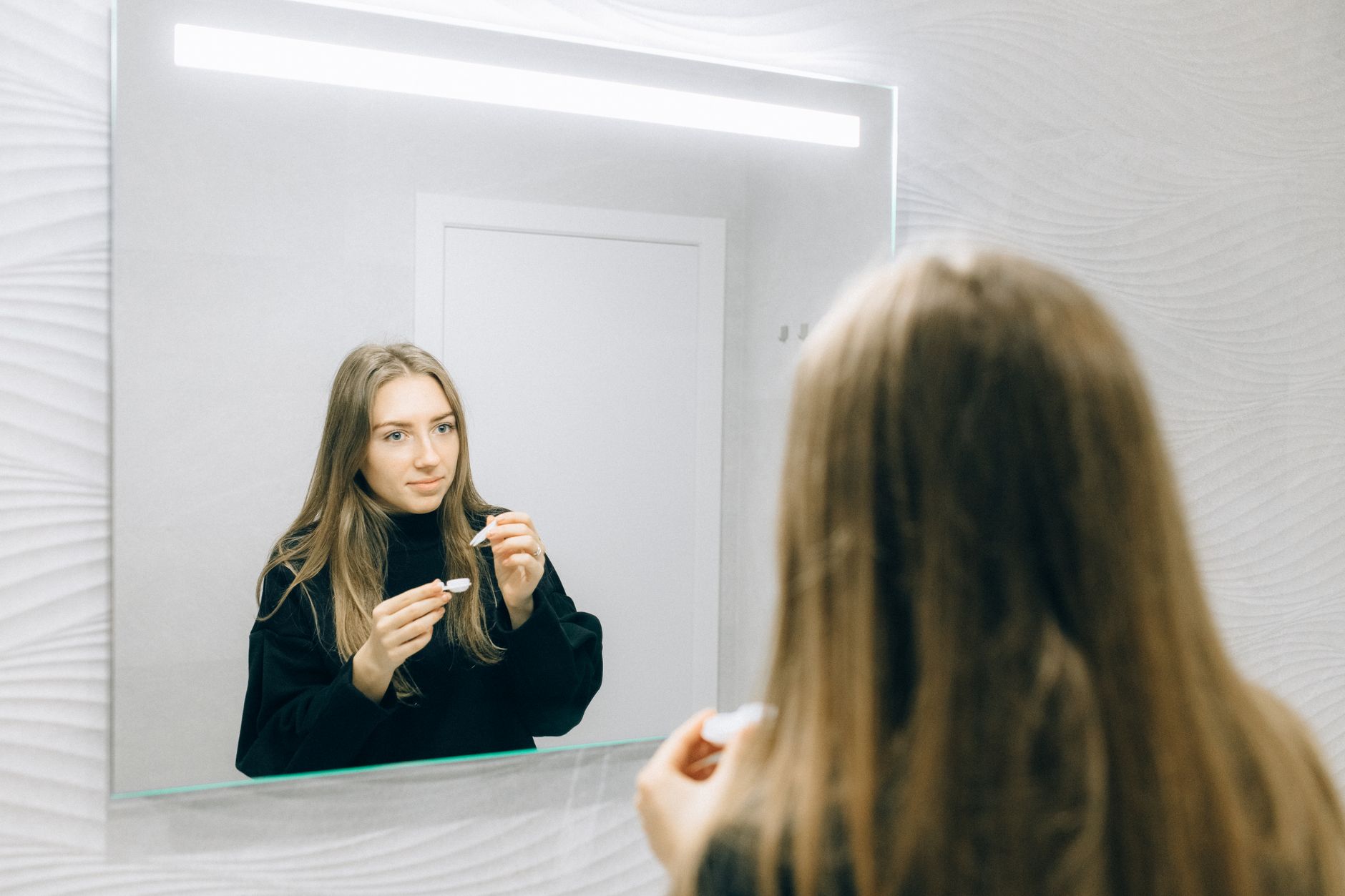
Circle lenses are a specific type of colored contact that adds a dark limbal ring to make the iris look larger and more doll-like. Standard colored contacts simply change eye color without enlarging the iris. Both require a valid prescription in the US. Your choice depends on the look you want: a natural color shift vs. a dramatically bigger, brighter eye.
What Are Circle Lenses, and How Do They Differ from Standard Colored Contacts?
Circle lenses and standard colored contacts share the same basic premise: a tinted medical-grade polymer that sits on your cornea and changes how your eye looks. The structural difference is what separates them. Circle lenses feature a dark outer ring, called a limbal ring, printed into the lens graphic. That ring visually extends the iris diameter by 1 to 3 mm beyond your natural iris edge. Standard colored contacts skip the limbal ring entirely and focus purely on pigment: they swap or deepen your iris color without touching apparent eye size. At Hapa Kristin Same-day Colored Contacts, we stock both styles so you can compare the limbal ring effect in person before committing to a full box. Diameter tells the same story. Circle lenses typically range from 14.0 to 15.0 mm, while standard colored contacts cluster around 13.8 to 14.2 mm. That extra millimeter or two is the entire visual engine behind the dolly-eye effect. Both types are available in plano (non-corrective) and prescription-correcting versions, so vision correction is never a barrier to wearing either style.
How Does the Limbal Ring Effect Work?
The printed dark ring on a circle lens mimics your natural limbal ring, which is the dark border that separates your iris from the white sclera. Research from the University of California, Irvine has linked a prominent natural limbal ring to perceptions of youth, health, and attractiveness, which explains why the cosmetic version resonates so strongly in K-beauty and anime-inspired aesthetics (colored-contacts.us). The mechanics are straightforward: a wider graphic area combined with a bold outer ring fools the eye into reading a larger iris. The effect is most dramatic on lighter eyes, where contrast between the ring and the iris is highest, but it remains clearly visible on dark brown eyes too. This is the core reason circle lenses dominate cosplay, K-pop fandom aesthetics, and editorial shoots. The big-eye illusion is built directly into the lens architecture, not left to makeup alone.
How Do Standard Colored Contacts Change Your Eye Color?
Standard colored contacts use three-tone or multi-layer tinting to blend with or fully replace the natural iris pattern. Enhancement tints are semi-transparent: they deepen and enrich your existing iris color while letting the base pattern show through, creating a dimensional, layered result. Opaque tints fully block the underlying iris, making dramatic color changes possible even on very dark brown eyes. The finished result looks like a genuine color change with no enlarging effect, which is exactly why standard colored contacts read as more natural compared to circle lenses (colored-contacts.us). If you want grey eyes without looking like you stepped out of an anime, standard colored contacts are the tool for that job. The lens sits inside the limbal boundary of your natural iris, so scale stays the same while color transforms completely.
Which Look Is Right for You? Choosing Between Circle Lenses and Colored Contacts
The fastest decision framework is this: if your priority is size and impact, choose circle lenses; if your priority is color and naturalness, choose standard colored contacts (colored-contacts.us). Beyond that headline rule, skin tone and eye shape push the decision further. Cool undertones tend to look striking in grey, blue, and violet lenses, while warm undertones are flattered by honey, chestnut, amber, and warm hazel shades. Neutral undertones have the widest flexibility and can pull off nearly any color family. The global colored contact lens market was valued at $5.93 billion in 2024 and is projected to reach $9.11 billion by 2035 (blog.hapakristin.us), which reflects how seriously consumers now treat eye color as a style variable, the same way they treat hair color or lipstick.
What Eye Look Are You Going For?
Circle lenses are the go-to for dramatic selfies, cosplay, anime-inspired looks, K-pop aesthetics, content shoots, and special events where you want your eyes to be the focal point of the frame. Standard colored contacts work better in professional environments, date nights, festivals where you want a polished rather than theatrical look, and any context where believable, subtle enhancement matters more than spectacle. At Hapa Kristin Same-day Colored Contacts, we organize both categories by aesthetic and skin undertone so the choice feels like picking a lipstick shade, not consulting a product manual. Our team has found that matching lens diameter and limbal ring intensity to your specific eye shape produces the most flattering result. Think of building a lens rotation the same way you build a makeup bag: a few bold circle lens shades for shoot days, and a reliable set of natural colored contacts for everyday wear.
How Does Eye Color and Skin Tone Affect the Final Result?
Dark brown eyes need fully opaque lenses to show vibrant colors like grey, blue, or green. A semi-transparent enhancement tint on very dark eyes produces almost no visible shift, so opaque construction is non-negotiable if you want a true color payoff. Light hazel or green eyes can use enhancement-tint lenses for a dimensional layered effect because the pigment blends with the natural iris instead of competing with it. For a concrete example: a medium-depth warm-olive skin tone with dark brown eyes will read stunning in a warm amber or honey-brown opaque circle lens, because the warm pigment echoes the skin's undertone while the limbal ring adds definition without creating jarring cool-warm contrast. Consider a 24-year-old beauty content creator in Los Angeles with warm undertones and deep brown eyes who wants to film a trending K-pop-inspired makeup video this Friday. She could grab a warm honey-brown opaque circle lens same-day from Hapa Kristin, shoot her content while the audio is still viral, and have her iris look noticeably larger and more luminous on camera without waiting for an overseas order to arrive. That same person in a cool-grey circle lens might look striking for a shoot but less natural for everyday wear. Knowing your undertone eliminates most of the guesswork.
Safety, Comfort, and Prescription Requirements for Both Lens Types
US law requires a valid prescription to purchase any contact lens, including purely cosmetic circle lenses and colored contacts. The FDA classifies all contact lenses as medical devices regardless of whether they correct vision, meaning they must be sold only through licensed channels (fda.gov). Improper use of contact lenses leads to nearly a million doctor visits each year in the US (winkeyecarenwi.com), a number that underscores the real stakes behind what can feel like a beauty decision. Circle lenses with larger diameters, specifically anything above 14.5 mm, require extra attention to oxygen transmission because a larger lens covers more corneal surface. Consumers using regulated disposable lenses demonstrate nearly 26% higher compliance rates with safe wearing schedules compared to those using unregulated sources (blog.hapakristin.us), which translates directly to fewer infections and complications.
Why Do You Need a Prescription for Non-Corrective Colored Contacts in the US?
Even plano lenses with zero corrective power alter the surface environment of your eye. Without a proper fitting, a lens with the wrong base curve can slide around, restrict blood flow to the cornea, or trap debris under the lens edge. An eye exam from a licensed eye care professional establishes your base curve, diameter, and any refractive correction needed, and a valid prescription in the US is typically good for one year. That prescription is then usable at any compliant retailer. FDA compliance is not a bureaucratic formality. Single-use contact lens systems can reduce lens-related inflammatory complications by approximately 33% compared to extended-use modalities (strategicmarketresearch.com), which means your replacement schedule choice has measurable health consequences. Daily disposables carry the lowest infection risk overall.
What Should You Look for on a Lens Specification Sheet?
Before you purchase, check four core specs. Base curve, listed as BC, should match your eye's natural curvature, usually between 8.4 and 8.8 mm. FDA clearance or CE marking confirms the lens meets the relevant safety standard for its market. Pigments in the color layer should be embedded between lens layers rather than printed on the surface, which prevents direct contact between the pigment and your cornea. Never sleep in colored contacts or circle lenses unless the packaging explicitly states extended-wear clearance.
How to Buy Circle Lenses and Colored Contacts in the US the Right Way
Start with a comprehensive eye exam and leave with a prescription that includes your base curve, diameter, and power. Purchase only from retailers that require prescription verification before checkout. That requirement is not a nuisance: it is the legal and safety foundation of the entire transaction. The colored contacts segment holds a 48.6% share of the global cosmetic contact lens market (strategicmarketresearch.com), and North America led that market by contributing over 50.08% of global revenue in 2024 (blog.hapakristin.us). US consumers are the largest buyer group in the world, which is exactly why domestic, regulated retail availability matters so much. Retailers and distributors adopting regulated disposable lens portfolios have reported nearly a 21% decline in customer complaint rates associated with discomfort and irritation (blog.hapakristin.us). Regulated sourcing pays off in comfort, not just compliance.
Why Does Same-Day Availability Matter for Beauty Shoppers?
Trend-driven looks are time-sensitive. A viral aesthetic can peak and fade within a week. Content creators need to shoot while inspiration and trending audio are live, not after a two-week international shipping delay. By 2026, approximately 58% of cosmetic contact lens purchases among consumers aged 18 to 34 are expected to occur through digital commerce channels (strategicmarketresearch.com), which signals that convenience is now a primary purchase driver. Same-day pickup turns a lens into an impulse beauty purchase comparable to buying a lipstick in store. We recommend building a lens rotation the way you build a makeup collection, keeping your go-to everyday shade in stock while experimenting with trend-driven circle lens colors for content days. That is the model Hapa Kristin Same-day Colored Contacts was built around: regulated, prescription-verified purchasing that moves at the speed of your creative calendar, not at the speed of international freight.
Circle Lenses vs Colored Contacts: Quick Comparison by Use Case and Look
Choosing between the two lens types becomes simple once you match lens design to your actual goal. Circle lenses excel in high-impact, editorial, and K-beauty contexts where visually larger eyes are the intended result. Standard colored contacts are the versatile everyday option for color transformation without dramatic scale change. Both are available in daily, monthly, and quarterly replacement schedules. The global K-beauty products market was valued at $12.43 billion in 2025 and is growing at a CAGR of 6.5% (researchandmarkets.com), and circle lenses travel directly inside that growth wave. Meanwhile the broader small diameter colored contact lens market is projected to grow at a CAGR of 9.7%, reaching approximately $11.76 billion by 2034 (datainsightsreports.com), indicating that demand for both lens types is accelerating, not plateauing.
Side-by-Side Feature Breakdown
The table below captures every key decision variable in one place. Use it to match your aesthetic goal to the right lens category, then use your skin tone and natural eye color to narrow to a specific shade.
| Feature | Circle Lenses | Standard Colored Contacts |
|---|---|---|
| Primary effect | Enlarge iris + change color | Change eye color only |
| Limbal ring | Always included | Rarely included |
| Typical diameter | 14.0 to 15.0 mm | 13.8 to 14.2 mm |
| Best aesthetic | K-beauty, anime, editorial, dolly eye | Natural, everyday, professional |
| Works on dark eyes | Yes, with opaque tints | Yes, with opaque tints |
| Comfort for long wear | Varies; check oxygen permeability | Generally high with quality materials |
| Prescription required (US) | Yes | Yes |
| Available at Hapa Kristin same-day | Yes | Yes |
| Ideal for content creators | High-impact shoots and trending looks | Everyday content and subtle color shifts |
| Skin tone flexibility | Best matched to specific looks | Widest range of undertone pairings |
The split is straightforward. Choose circle lenses for bigger eyes, K-beauty aesthetics, cosplay, and editorial shoots. Choose standard colored contacts for natural color shifts, professional environments, and daily wear flexibility. Both categories are in stock same-day at Hapa Kristin, so you can build a rotation across both without committing to just one style.
Frequently Asked Questions
Are circle lenses safe to wear every day?
Can you wear circle lenses if you have dark brown eyes?
Do I need a prescription to buy circle lenses or colored contacts in the US?
How long can you wear colored contacts or circle lenses in a single day?
What is the difference between enhancement tint and opaque tint colored contacts?
How do I know which colored contact shade will look good on my skin tone?
Where can I buy colored contacts same-day without waiting for international shipping?
Are circle lenses the same as cosplay lenses or costume contacts?
Can first-time contact lens wearers start with colored or circle lenses?
Why are some colored contacts sold overseas but not available from US retailers?
Which lens type looks more natural on the eye?
How do I choose the right base curve and diameter?
Can I wear circle lenses every day?
What should I know before buying colored contacts online?
Sources & References
- K-Beauty Products Market Report 2026 (opens in a new tab)[industry]
- FDA Contact Lens Guidance (opens in a new tab)[gov]
- Cosmetic Contact Lenses Market Report (2026) (opens in a new tab)[industry]
- Small Diameter Colored Contact Lenses Market to Hit $11.76B by 2034, CAGR 9.7% (opens in a new tab)[industry]
- Best Colored Contact Lens Brands 2026 (US) (opens in a new tab)[industry]
- Are Colored Contact Lenses Safe? (opens in a new tab)[org]
About the Author
Hapa Kristin Same-day Colored Contacts
Hapa Kristin offers same-day colored contacts designed for every skin tone and style. Their curated collection lets beauty-conscious women change their eye color as easily as their makeup.
Learn more at hapakristin.us → (opens in a new tab)Related Posts

8 Best Colored Contacts for Warm Skin Tones (Ranked by a Beauty Brand)
Warm skin tones glow with honey, hazel, amber, and earthy green lenses — but the wrong color can wash you out instantly. This ranked list breaks down the eight best colored contact options for golden, olive, and bronze complexions, with same-day picks from Hapa Kristin so you can shop and wear today.
15 min read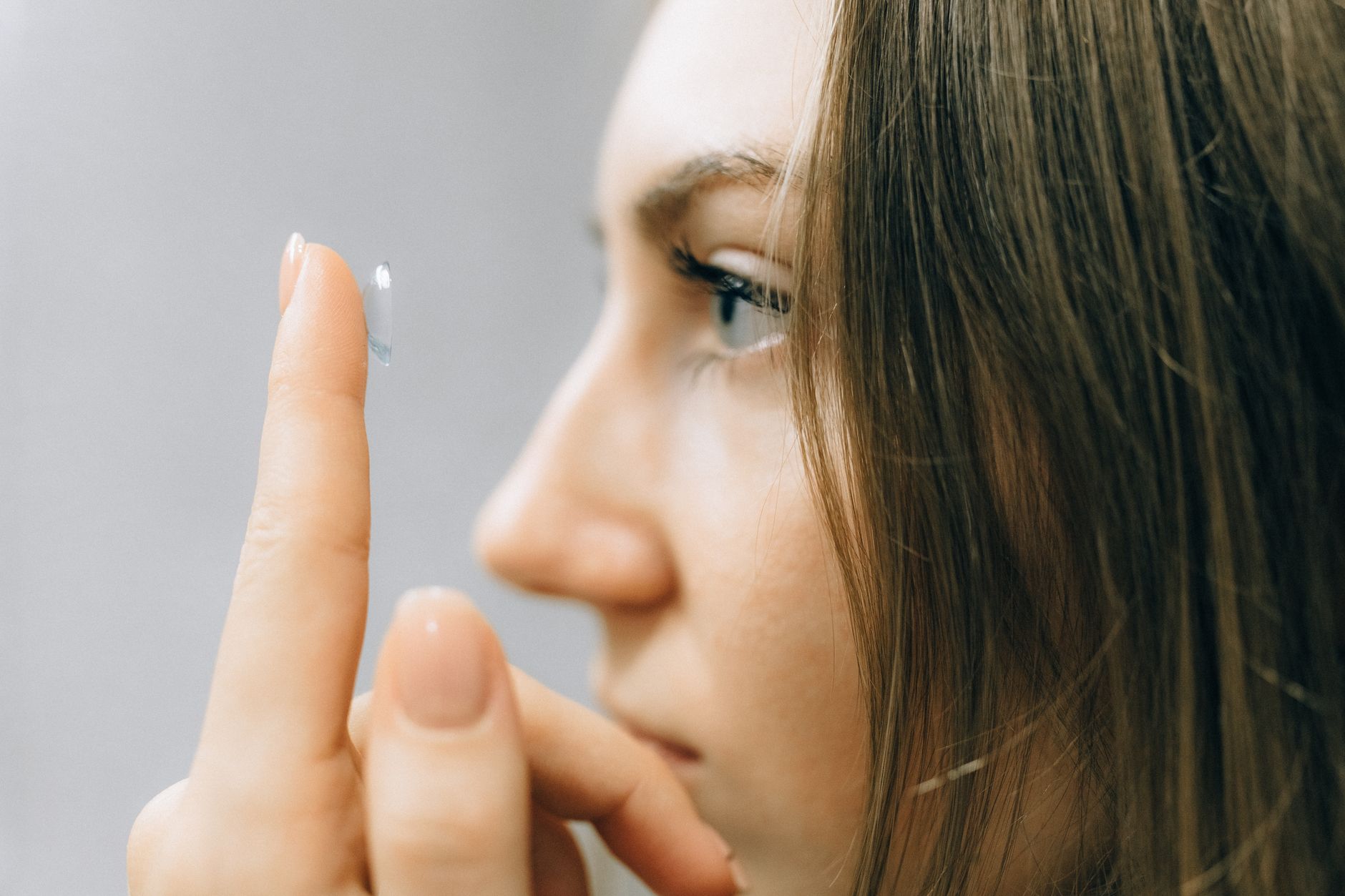
Everything You Need to Know About Colored Contact Safety, Comfort, and Care in 2026
Colored contacts can transform your entire look in seconds, but wearing them safely requires knowing the rules, the risks, and the right care routine. This guide covers everything from FDA regulations and prescription requirements to choosing a flattering color for your skin tone and keeping your lenses comfortable all day.
16 min read
Colored Contact Shades for Brown Eyes: How to Find a Natural Match
Brown eyes are the most common eye color in the world, which makes finding colored contacts that actually transform them a real challenge. This guide breaks down 12 shades proven to show up beautifully over dark irises, matched by skin tone and aesthetic, so you never waste money on a color that disappears on your eyes.
11 min read